Overview
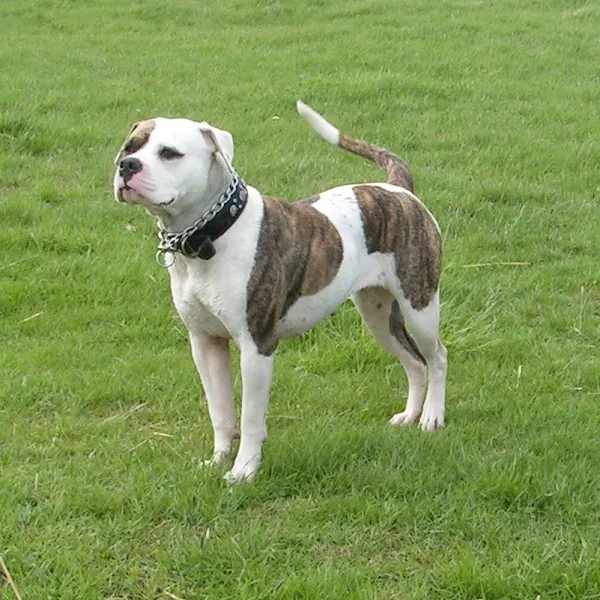
The American Bulldog is a stocky, strong mastiff-type dog that worked on Southern farms and ranches. It is built for power but is also surprisingly athletic.
The breed is loyal and devoted to its family, and does best with experienced owners who can offer training, structure and plenty of activity.
History
Ancestors of the breed came to the American colonies with English settlers and worked as farm guardians, stock dogs and catch dogs. They were bred for ability and temperament rather than pedigree. After the Second World War the type nearly vanished.
John D. Johnson and Alan Scott revived it by collecting the best surviving farm dogs, creating the Bully or Johnson type and the Standard or Scott type. The UKC recognised the breed in 1999, and the AKC Foundation Stock Service added it in 2019.
Appearance
A heavily built dog with a large head, deep chest and muscular shoulders. The short coat is smooth and close-lying. Johnson types are bigger and heavier with shorter muzzles, while Scott types are lighter, more athletic and longer-muzzled.
Many modern dogs are a mix of both. Adults usually stand 52 to 70 cm tall.
Temperament
Confident, devoted and eager to please, though they can be strong-willed. They are usually affectionate with their family and protective of home and property, and often reserved with strangers.
Early socialisation and firm, fair training are important, as their strength and drive can be a lot for novice owners.
Care and exercise
Needs daily exercise such as walks, play and structured activity, plus mental work to avoid boredom. Training should start early and stay consistent.
The short coat needs only a brush and a bath every few weeks. They drool more than many breeds, and should not be overheated in warm weather.
Health
Neuronal ceroid lipofuscinosis has been found in the breed. Skin problems are a particular concern, including allergic skin disease, ichthyosis, sun-related skin damage and juvenile-onset demodicosis. Hip and joint checks are sensible in a heavy dog.