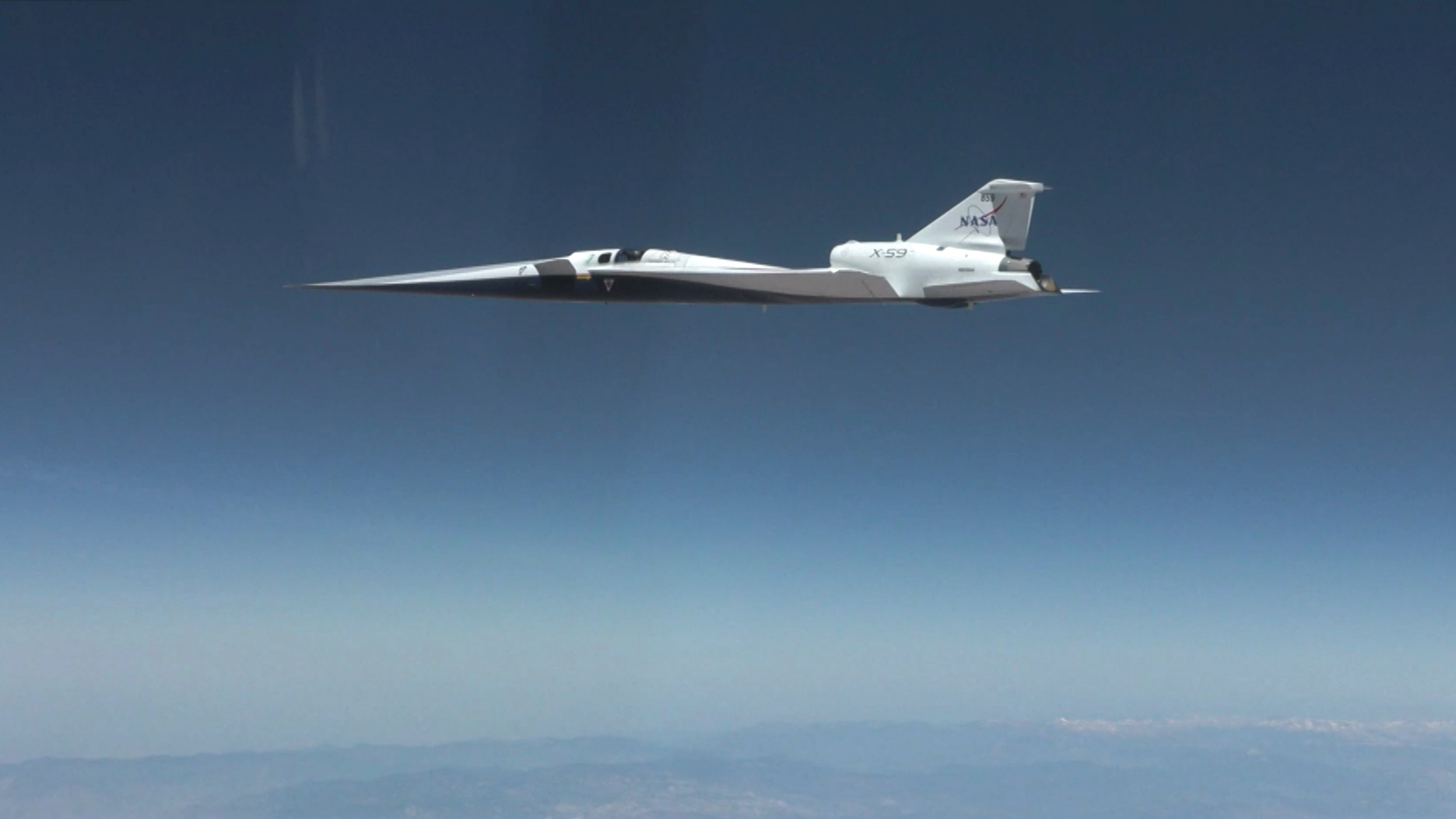
NASA's experimental X-59 aircraft broke the sound barrier for the first time on June 5, 2026, reaching Mach 1.1 at 44,340 feet above Edwards Air Force Base in California. NASA test pilot Jim "Clue" Less flew the aircraft for approximately 81 minutes in the milestone moment for the decade-long development program. In a subsequent "mission conditions" flight, the X-59 went on to reach its target speed of Mach 1.4 at 55,000 feet — a feat accomplished twice in a single sortie.
The X-59, developed by Lockheed Martin Skunk Works for NASA's Quesst (Quiet SuperSonic Technology) program, is engineered to produce a gentle "sonic thump" — comparable to a car door closing 20 feet away — rather than the loud, disruptive boom generated by conventional supersonic aircraft. Commercial supersonic flight over land has been banned in the United States since 1973 because of the disturbance sonic booms cause to communities below.
NASA now plans to fly the X-59 over U.S. communities to collect public reaction data, which will be submitted to the FAA and the International Civil Aviation Organization (ICAO). The goal is to build an evidence base that could rewrite overland supersonic regulations and bring commercial supersonic passenger travel back to the skies for the first time in more than 50 years.