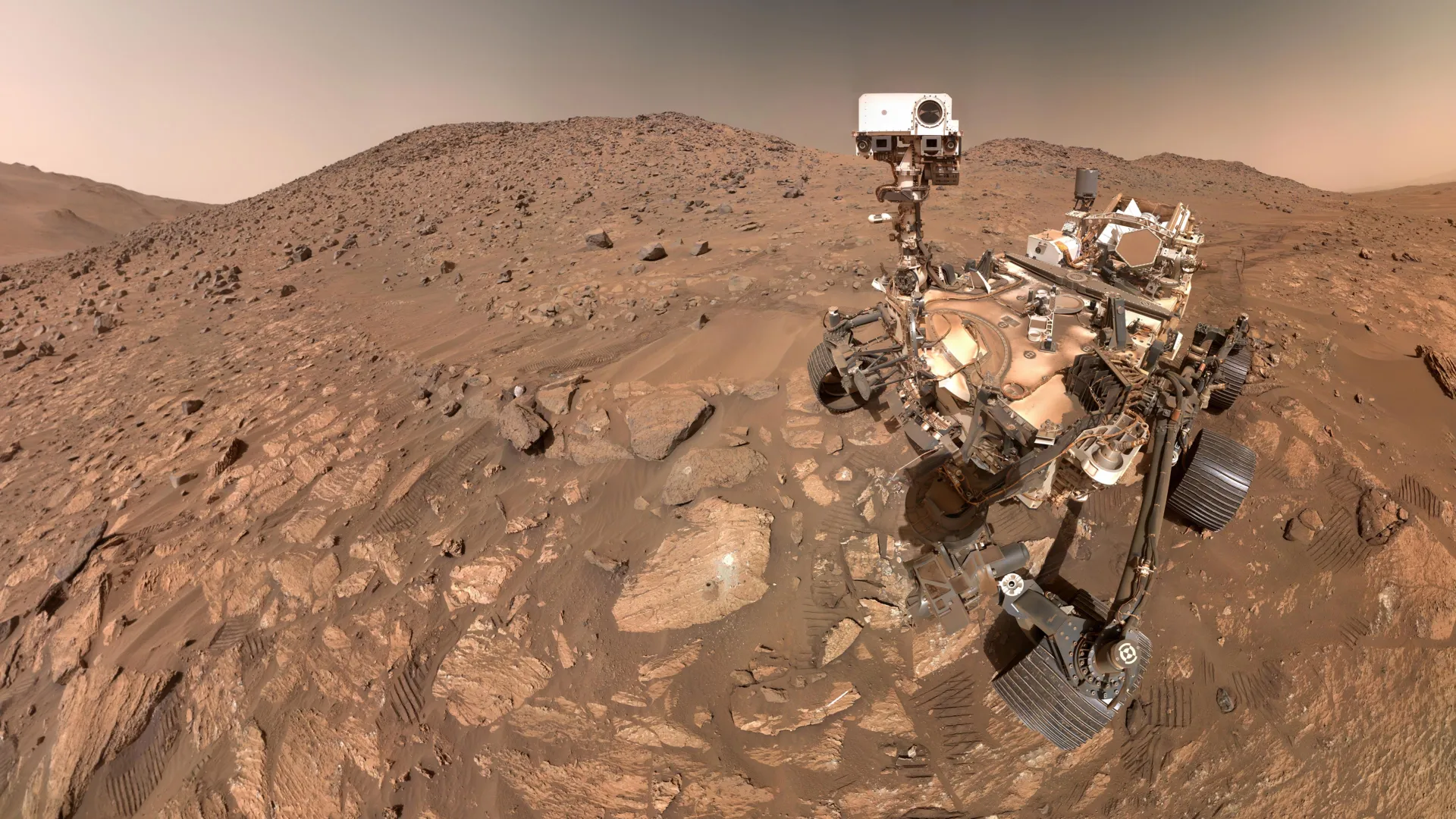
NASA's Perseverance rover has confirmed organic carbon in two ancient rocks of the Bright Angel formation in Jezero crater, according to research published in Science Advances. The rocks are the same ones tied to the potential biosignature NASA announced in September 2025, and the new work gives definitive confirmation of the organic carbon, an essential component of life.
The team used the SHERLOC instrument on the rover's robotic arm. The material sits just beneath the surface, where harsh conditions can destroy organic compounds, so its preservation surprised researchers. The rocks are mudstones formed from fine sediment that a river carried into the crater billions of years ago.
Perseverance sampled Bright Angel more than 2,000 miles from Gale Crater, where Curiosity earlier detected organic compounds. Finding them at two distant sites suggests the chemistry behind life's building blocks may once have been widespread on Mars. Neither rover can tell fossilized microbes from geological processes, which will require lab analysis of returned samples.