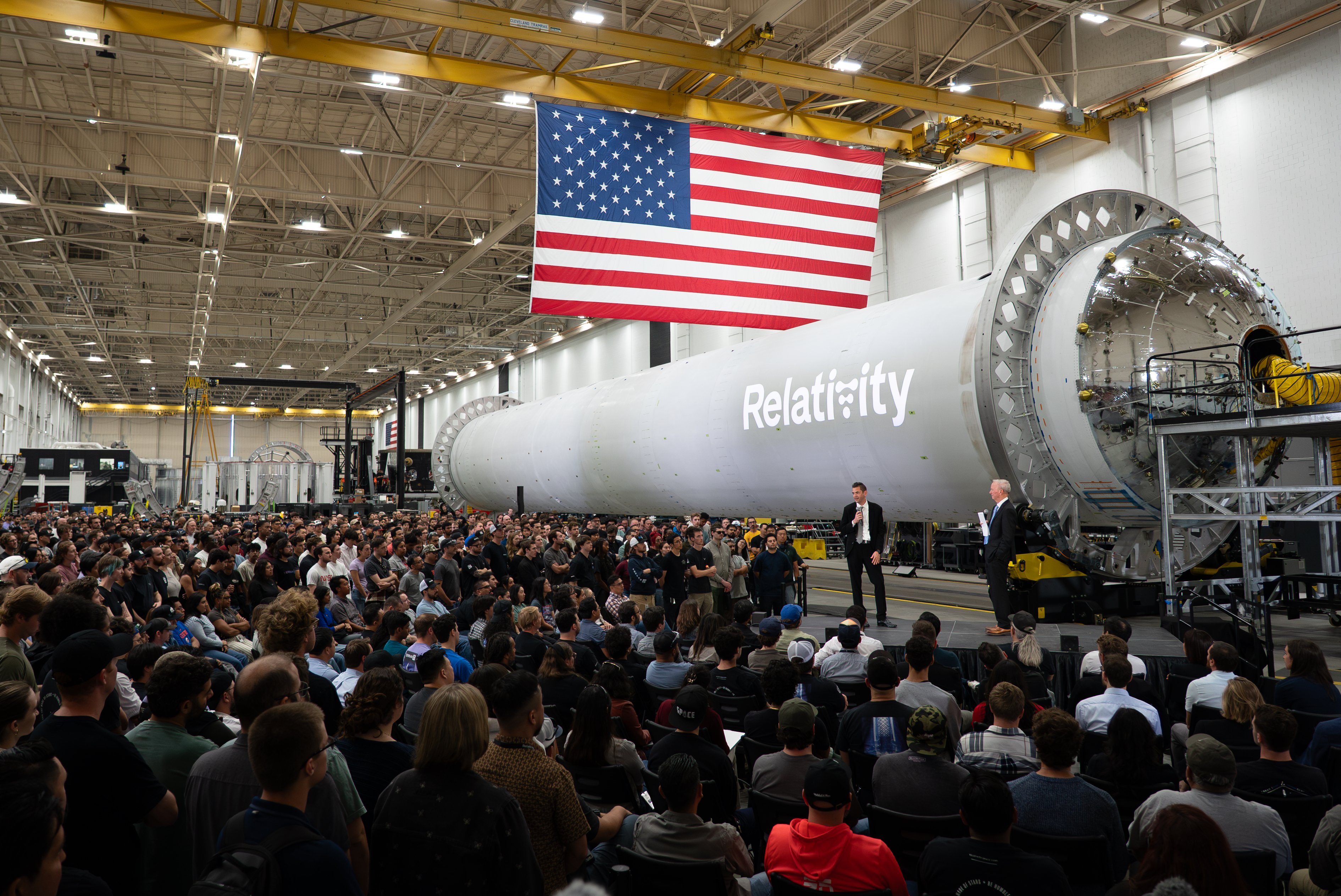
NASA and Relativity Space, the rocket startup now led by former Google CEO Eric Schmidt, announced a public-private partnership on June 17 to launch an atmospheric science orbiter to Mars. Under the deal, NASA contributes the Aeolus payload suite — four instruments measuring Martian winds, temperatures, dust, and clouds — while Relativity Space provides the spacecraft, its reusable Terran R rocket, and cruise operations, with launch targeted for 2028.
The Aeolus mission would deliver the first integrated daily global measurements of Mars's atmosphere, data scientists say is critical for reducing risks during future crewed and robotic landings. NASA Administrator Jared Isaacman called the model "a force multiplier for science," arguing it lets the agency stretch its budget by leveraging commercial hardware while retaining scientific leadership.
The announcement follows NASA recently losing contact with MAVEN, its existing Mars atmospheric monitoring spacecraft launched in 2013, making a replacement mission increasingly urgent. Relativity Space's Terran R is itself scheduled to make its debut flight in late 2026, before carrying the Aeolus instruments toward the Red Planet.