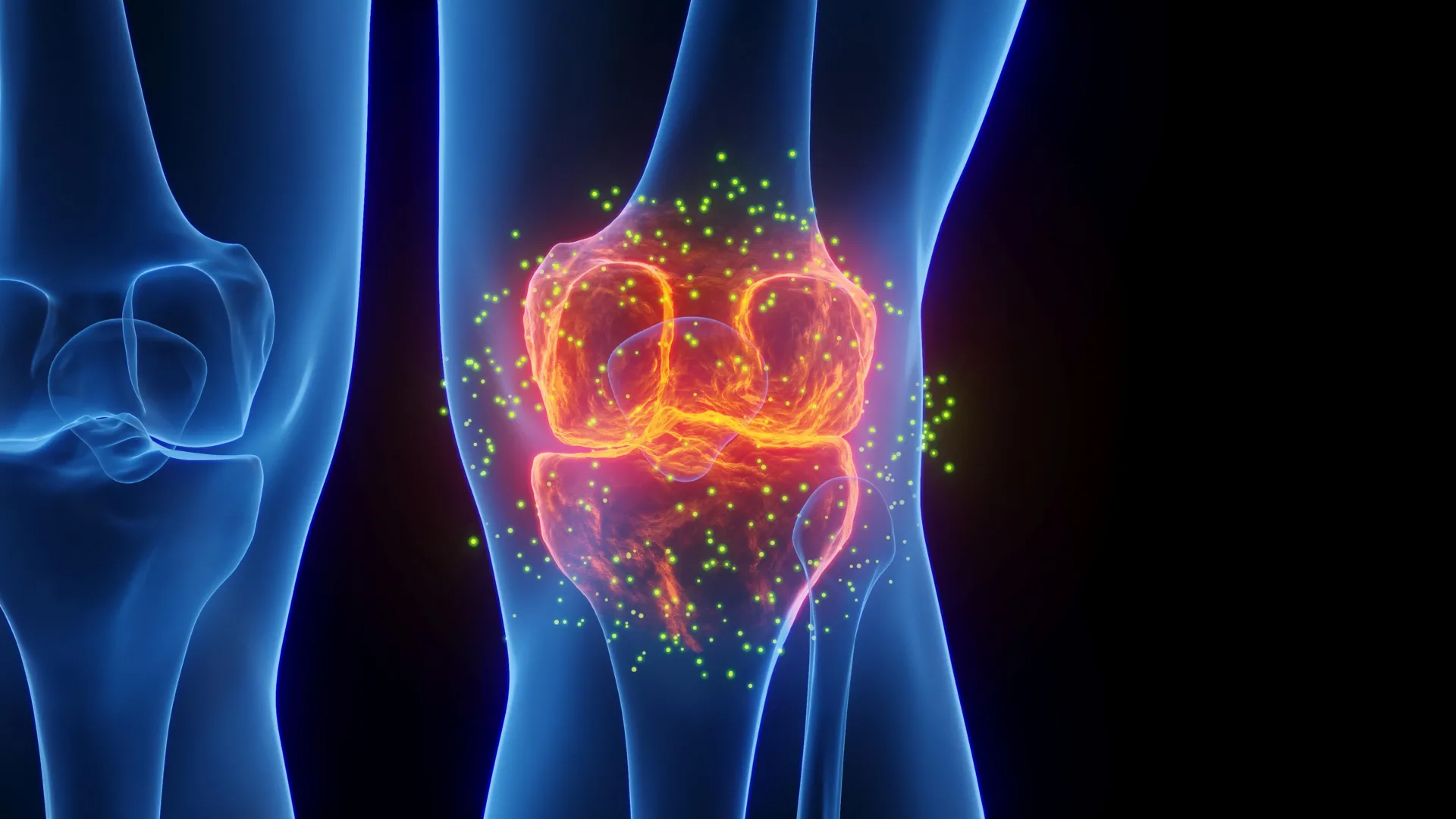
Stanford researchers have discovered a way to regenerate worn-out joint cartilage by blocking a protein called 15-PGDH, which plays a key role in cellular aging. In older mice, the treatment restored lost knee cartilage and prevented arthritis from developing after serious joint injuries — without relying on stem cells.
The mechanism works by coaxing existing cartilage-producing cells, called chondrocytes, to revert their gene activity to a more youthful state. Crucially, when human cartilage samples collected during knee replacement surgeries were exposed to the treatment, they began producing new, functional cartilage — a promising sign for eventual human applications.
Osteoarthritis affects approximately one in five U.S. adults and costs roughly $65 billion annually in direct healthcare. An oral version of the 15-PGDH inhibitor is already in clinical trials for age-related muscle weakness, and researchers plan to extend trials to cartilage regeneration soon. The study was published in Science in June 2026.