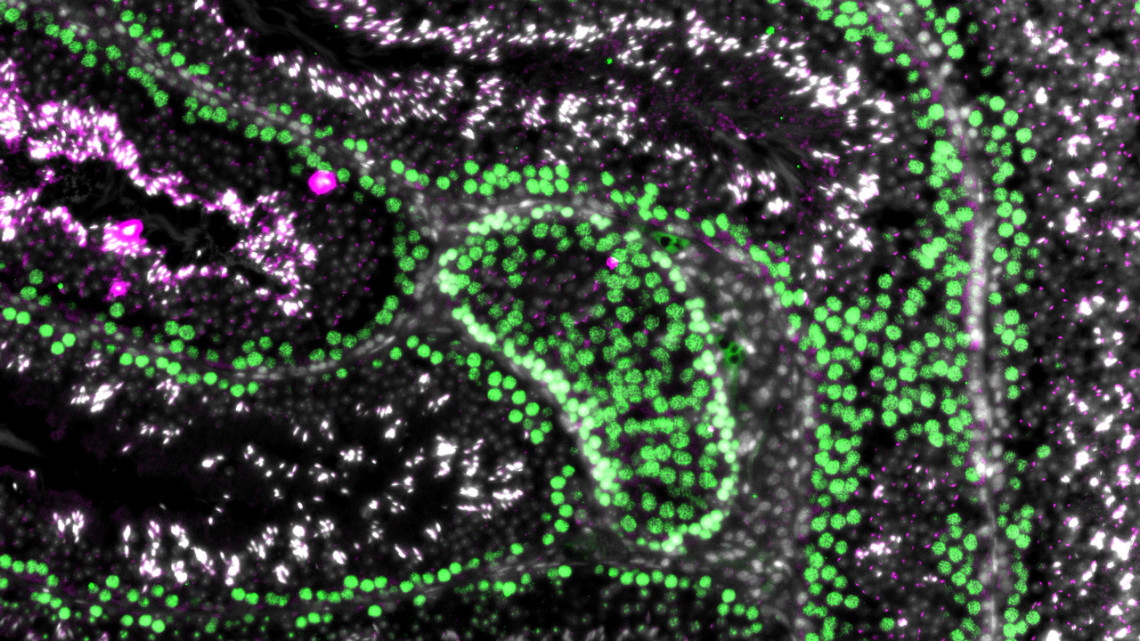
Researchers at Cornell University have developed a nonhormonal male contraceptive approach that completely stops sperm production and is fully reversible. The study, published April 7 in the Proceedings of the National Academy of Sciences, used a small molecule called JQ1 to disrupt meiosis — the process by which sperm cells are created — by targeting a critical checkpoint called prophase 1.
Senior author Paula Cohen, professor of genetics at Cornell's College of Veterinary Medicine, and her team administered JQ1 to male mice for three weeks and found it eliminated all sperm production. After stopping treatment, normal sperm production resumed within six weeks, and the mice went on to father completely healthy offspring. The key was targeting meiosis rather than spermatogonial stem cells, which would cause permanent infertility if destroyed.
Cohen and colleagues plan to launch a company within two years to develop a human version, likely as an injection taken every three months or a patch. The breakthrough addresses a decades-long gap in reproductive medicine — no reversible male contraceptive beyond condoms has reached the market despite years of research.