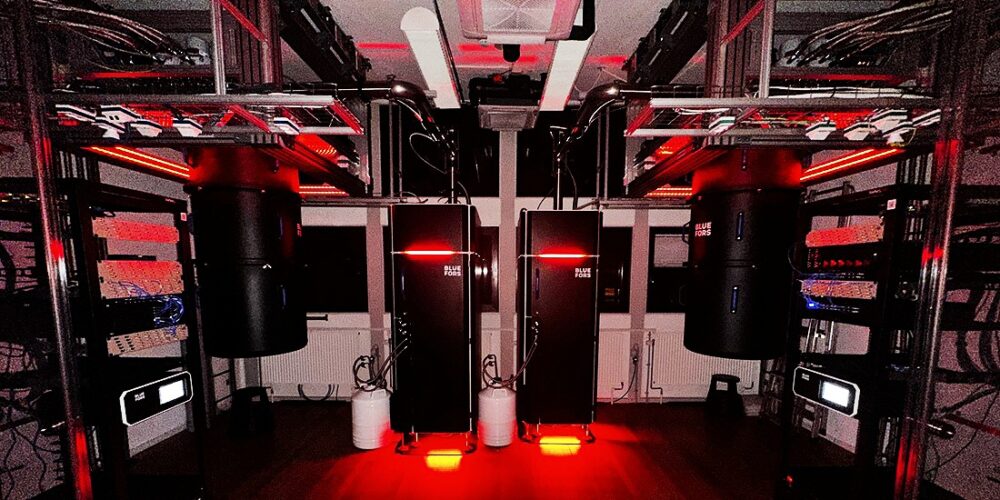
An international team led by the Norwegian University of Science and Technology (NTNU) and the Niels Bohr Institute in Copenhagen has developed a technique to measure quantum information loss 100 times faster than previous methods. The approach, published in Physical Review X, tracks qubit relaxation rates in approximately 10 milliseconds — down from one second — enabling near real-time monitoring of data degradation in superconducting qubits.
The team, led by Professor Jeroen Danon at NTNU and postdoctoral researcher Dr. Fabrizio Berritta at the Niels Bohr Institute, built a system using a Field Programmable Gate Array (FPGA) that updates its estimate of a qubit's relaxation rate within milliseconds. This speed matches the natural pace of quantum fluctuations, revealing subtle instabilities previously invisible to scientists.
The breakthrough addresses one of quantum computing's biggest challenges: qubits lose their stored information unpredictably, making error correction and system stability extremely difficult. By tracking this loss in real time, researchers can now identify root causes of decoherence, potentially accelerating the path toward practical, reliable quantum computers.