Overview
The Xiasi Dog is a medium-sized hunter from the village of Xiasi in Guizhou Province, southwest China. The Miao people have kept it for generations as a hunting companion and watchdog, and local families also see it as a bringer of good fortune.
Today the breed is critically endangered. Its numbers are very low and conservation projects are working to protect it, while it is increasingly welcomed in Chinese dog shows.
History
Folklore says the dog was once called the White Dragon dog. A tale from the reign of the Qianlong Emperor tells that a governor brought one on a boar hunt, and the Emperor was so struck by its speed that the dog came to be named after its home village.
The Miao people developed it to cope with dangerous game in dense forests and steep mountains. Numbers fell during the twentieth century, and a survey in 1999 found only about 270 purebred dogs. Government and breed-conservation projects have since worked to preserve it.
Appearance
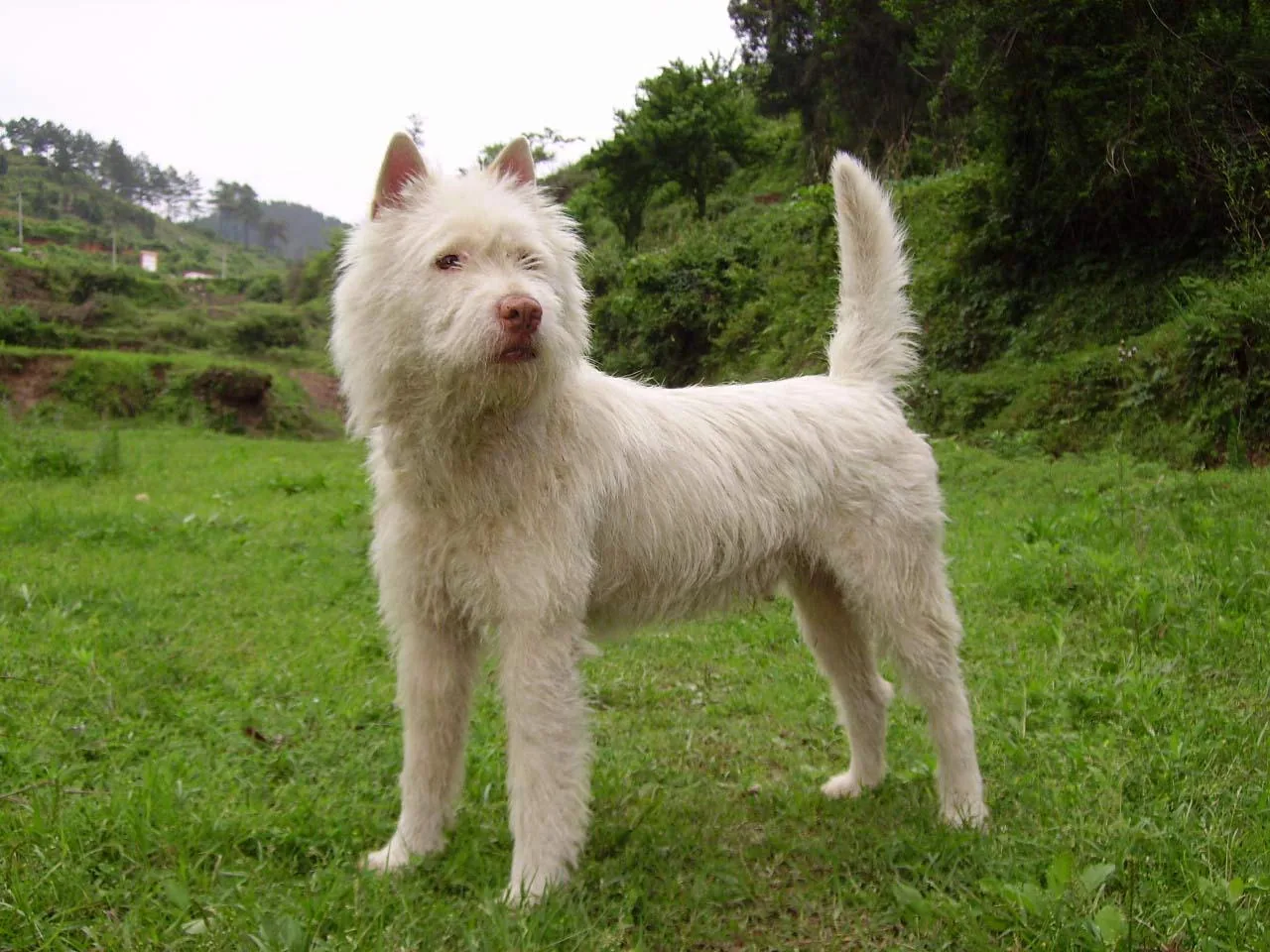
The Xiasi is a medium-sized, compact dog with a white or cream coat and a pale pink nose. The hair is thick, hard and wiry, and often stands up by itself. It comes in short, medium or long lengths.
The head is sizeable with prick ears and a square muzzle. The chest is deep and rounded, the legs strong, the feet tough and the tail carried upright. Males stand about 46 to 50 cm and weigh 16 to 20 kg; females are a little lighter.
Temperament
Xiasi Dogs are loyal and obedient with their people and are described as friendly toward strangers. They are quick, agile and bold in the field, with explosive power and plenty of stamina.
As hunters they thrive on activity and a job to do, so they suit owners who enjoy outdoor life.
Care and exercise
This is an active working dog that needs regular vigorous exercise and room to run, ideally in a rural setting. Mental work such as scent games and training helps keep it content.
The wiry coat is easy to look after with occasional brushing. Early socialisation and consistent, kind training suit its willing nature.
Health
Genetic testing shows low genetic diversity because the population is so small, which makes careful breeding important. No breed-specific disease is well documented.