Overview
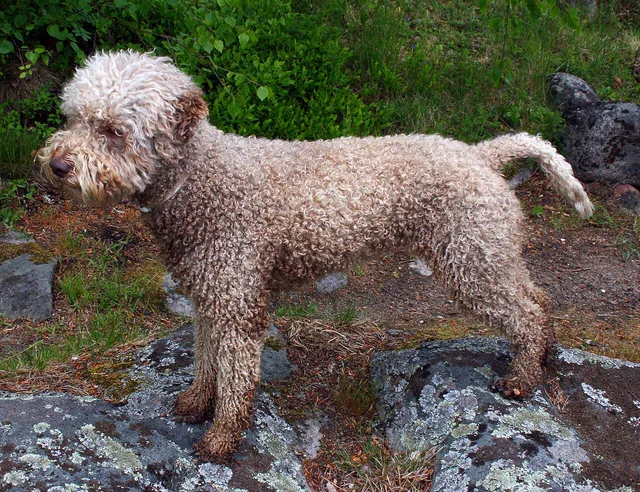
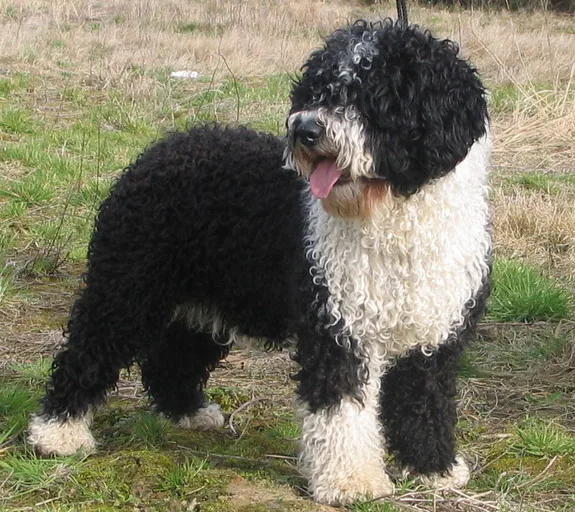
The Spanish Water Dog is a medium-sized, robust breed with a woolly curly coat, traditionally used to herd sheep and cattle, retrieve game in marshes and assist coastal fishermen.
Today it is mainly a companion and an excellent partner for active people who enjoy training and outdoor life.
History
Long a minority dog in Spain, the breed's numbers fell sharply in the 1970s and 1980s as farming and fishing changed. Studies of the remaining dogs identified three types: the Marismeño, the Serrano and the Norteño.
The Spanish kennel club recognised it in 1975, the FCI in 1999, and Spanish law in 2001. The Norteño type was recognised as a separate breed, the Cantabrian Water Dog, in 2012.
Appearance
A medium, athletic dog slightly longer than tall, with a strong head and triangular ears. Males stand 44 to 50 cm and weigh 18 to 22 kg, females 40 to 45 cm and 14 to 18 kg. About half are born with a naturally short tail.
Temperament
Intelligent, loyal and eager to work, it bonds closely with family and can be wary of strangers. It learns quickly and loves to have a job, but can become bored or noisy if under-stimulated.
Care and exercise
Needs daily exercise, swimming if possible, and mental tasks. The woolly coat should be brushed regularly to prevent matting and is usually clipped once or twice a year. Do not bathe too often, and dry the ears after swimming.
Health
Life expectancy is about 14 years. Health testing has found hip dysplasia, progressive retinal atrophy, hypothyroidism, Addison's disease, exocrine pancreatic insufficiency, allergies, cataracts, congenital hypothyroidism with goitre, distichia, cherry eye and neuroaxonal dystrophy.