Overview
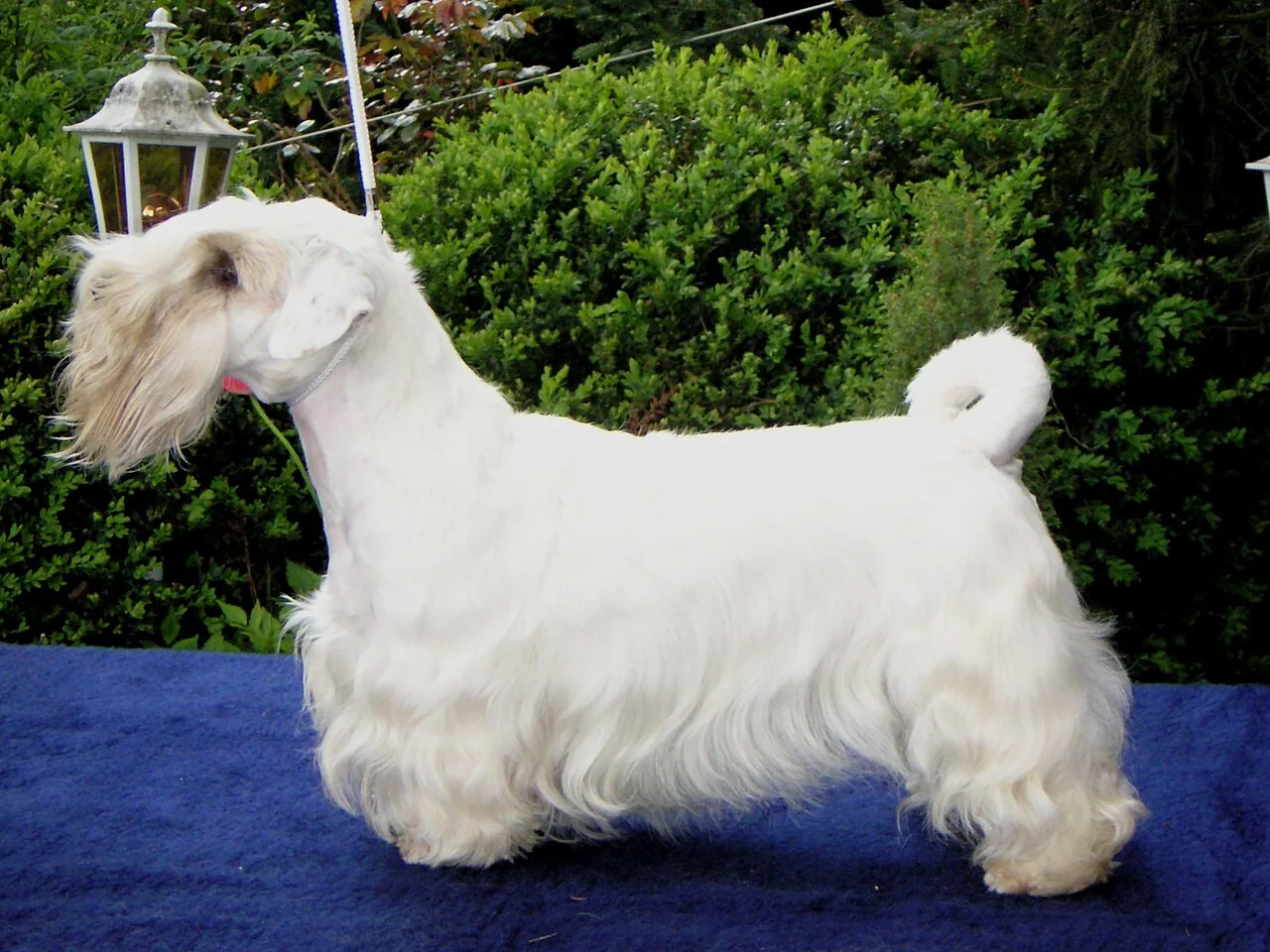
The Sealyham is a small, sturdy, mostly white terrier created in Pembrokeshire, Wales, as a tough working dog. It is long in the body and short in the leg, with a strong jaw and a bearded face.
It makes a lively, loyal family dog and still has the heart of a ratter. It is rare today, and the Kennel Club lists it among its vulnerable native breeds.
History
Captain John Edwardes developed the breed at Sealyham House in the second half of the 19th century. He wanted a small white dog with strong jaws and a wiry coat that could be seen easily in the field, and he kept only the strongest. Welsh Corgi and Wire Fox Terrier blood is thought to have been used.
After the First World War the Sealyham became fashionable with film stars, writers and royalty. Its numbers later fell sharply, and only a few dozen puppies were registered in the UK in some recent years, prompting campaigns to save the breed.
Appearance
The Sealyham stands about 30 cm tall and weighs around 8 to 9 kg, with a long, strong body, a square head and a broad muzzle. The ears fold forward and the tail is carried upright.
The coat is white, with a wiry, weather-resistant top coat over a dense undercoat. Markings on the head and ears may be lemon, brown, black, blue or badger.
Temperament
Sealyhams are cheerful, affectionate and clownish, and they bond closely with their families. They can be stubborn and quite vocal, and they keep a terrier's keen hunting instinct.
They are content with company but cope with being left alone for a while. With early socialisation they can live with other pets, though they may chase small animals.
Care and exercise
They need a daily walk and some play, but are happy in town or country. Training should be patient and consistent, as a Sealyham will test its limits.
The coat needs regular combing and either hand stripping for show dogs or clipping for pets. Long hair on the legs and beard gets dirty in mud, so expect to wash it occasionally.
Health
A UK study found a life expectancy of about 13 years. Primary lens luxation, an inherited eye disease, is the main concern, and a DNA test lets breeders avoid it. Degenerative myelopathy can also occur.