Overview
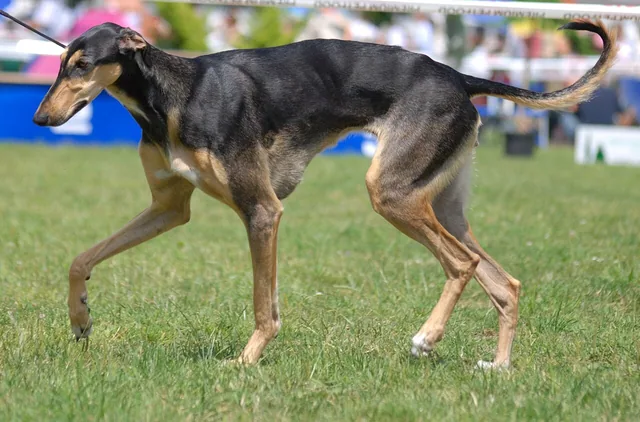
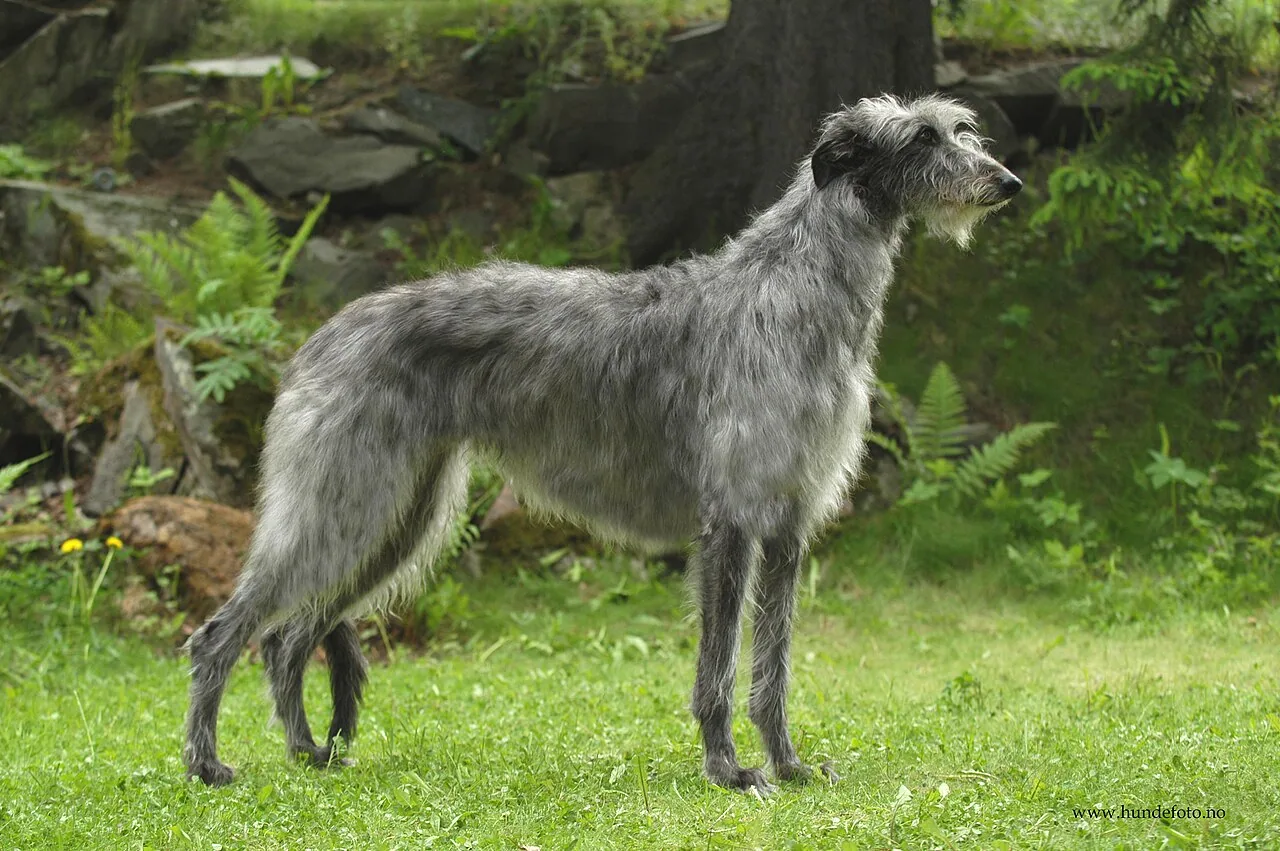
The Scottish Deerhound is one of the tallest sighthounds, a rough-coated hound bred to course red deer in the Highlands. It resembles a larger, heavier-boned Greyhound with a wiry coat.
At home it is quiet, polite and affectionate, but outdoors it keeps strong chasing instincts and the speed to match.
History
Dogs resembling Deerhounds appear in old Scottish carvings, though the link to the modern breed is not proven. The breed became widely known in the early nineteenth century, and was long seen as kin to the Irish Wolfhound, for which it served as a key foundation breed late in the century.
It coursed red deer until stalking with rifles made fast dogs less useful. A few enthusiasts then kept it going as a show breed, and it also hunted kangaroo, boar and wolves overseas.
Appearance
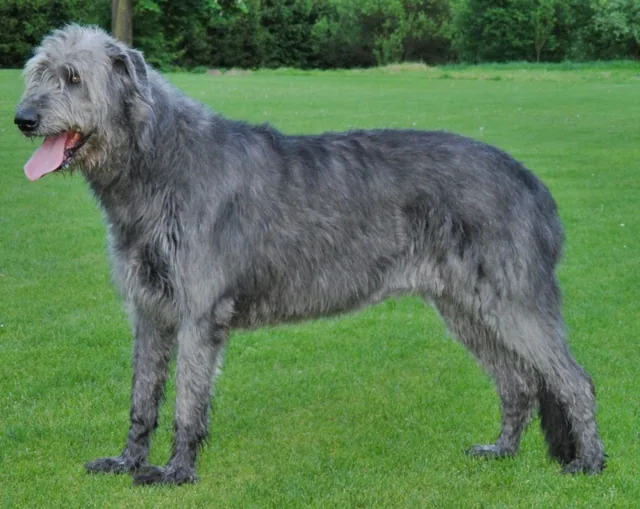
A big, lean, rough-coated hound, with males at least 75 cm at the withers and weighing roughly 39 to 50 kg, and females from about 71 cm and 34 to 43 kg. The head is long with a flat skull and tapering muzzle, the eyes dark, and the small rose ears fold back.
The harsh, wiry coat is about 7 to 10 cm long, with a mane, softer beard and moustache.
Temperament
Deerhounds are calm, sweet-natured and dignified, often described as gentle giants indoors. They are loyal to their family, friendly with most people and rarely aggressive.
They are sensitive and respond to kind, patient training, though they can be independent. A strong chase instinct means small animals may be seen as prey.
Care and exercise
They need a long daily walk and the chance to gallop safely in a large, securely fenced area, but are relaxed indoors. They are not suited to being kept in a small flat or left unsupervised off lead.
Brush the wiry coat weekly and tidy it occasionally. Large dogs need comfortable bedding, and puppies should not be over-exercised while growing.
Health
The breed has a shorter life expectancy than many, with a UK study finding about 10.5 years. Heart disease is the leading cause of death, followed by cancer, and dilated cardiomyopathy is notably common. Like other deep-chested breeds they may be at risk of bloat, and they can be sensitive to anaesthetics.