Overview
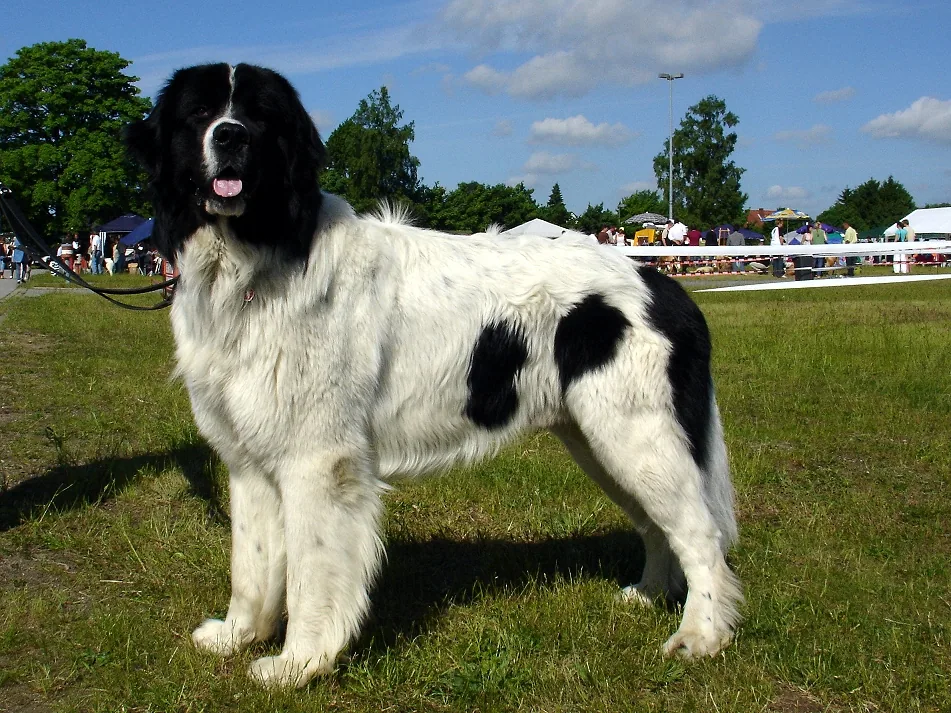
The Landseer is a large, strong water dog with a striking black and white coat. In continental Europe it is considered a separate breed from the Newfoundland.
It is known for calm nature and a love of people. It needs space, a patient owner and an easygoing home.
History
The ancestors of the breed were Newfoundland dogs used by fishermen in Newfoundland and Labrador. Black-and-white examples were fashionable in Victorian times and were painted by artists such as Edwin Landseer, who gave them their name.
When solid black became more popular, breeders in the 1930s worked to recreate the dogs in the paintings. A separate breed club was formed in Germany in 1960, and similar clubs followed in Belgium and Holland.
Appearance
Compared with the Newfoundland, the Landseer is taller, longer-legged and less bulky, with a longer, more tapered head. The coat is said to be curlier and always piebald.
It is a powerful, well-balanced dog with a broad chest and a thick, water-resistant coat.
Temperament
Landseers are calm, gentle and friendly with people, including children, and they are natural water lovers. They are usually patient and good-natured with other animals.
They are intelligent and willing but need patient, kind training from puppyhood because of their size.
Care and exercise
Moderate daily exercise suits them, including walks and swimming. They should not be overworked while growing.
The thick coat needs brushing several times a week, and more at moulting time. Expect drool and a wet floor after swimming or drinking.
Health
Like other giant breeds, they may suffer from joint problems and bloat. A study found a COL6A1 gene variant in Landseers with muscular dystrophy, so health screening matters.