Overview
The Kuvasz is a big, strong white guardian that has watched over livestock, property and families in Hungary for centuries. It is dignified and thoughtful, and it takes its protective role seriously.
It can be a loving family dog in the right hands, but it needs early socialisation, firm leadership and room to move.
History
The Kuvasz originated in the Carpathian Basin and may have arrived in Hungary during the Migration Period. Its name is thought to come from an Old Turkish word. In the fifteenth century King Matthias Corvinus is believed to have kept many of them at court as guards, hunters and even war dogs.
Systematic breeding began in the late nineteenth century, and the FCI recognised the breed in 1934. By the end of World War II fewer than thirty remained in Hungary, but dedicated breeders have since rebuilt the population.
Appearance
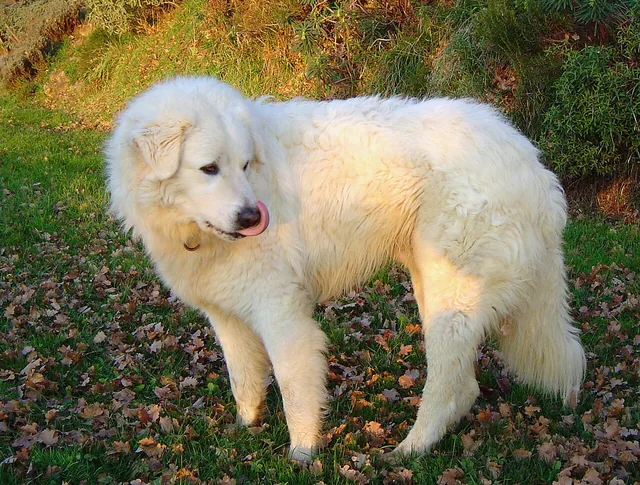
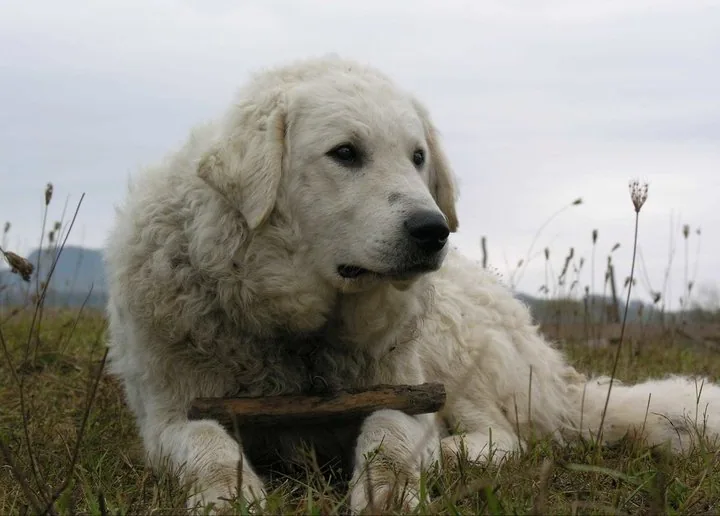
The Kuvasz is large and powerful. Males stand about 71 to 76 cm and weigh 48 to 62 kg, while females are 66 to 70 cm and 37 to 50 kg. The thick, coarse white or ivory coat has a soft undercoat, and the skin is slate-grey.
The head is wedge-shaped with almond-shaped dark brown eyes, and the nose, lips and eye rims are black.
Temperament
Kuvaszok are devoted to their family and fiercely protective, and they are wary of strangers. They are intelligent and independent thinkers, used to making their own decisions while guarding.
They need thorough socialisation and consistent, patient training, and are not ideal for novice owners.
Care and exercise
The dense coat needs regular brushing, especially during heavy seasonal shedding. They need daily exercise and a securely fenced space, as they are natural guardians that patrol their territory.
They do best with a job or a large property and plenty of human contact. Training should begin early.
Health
The Kuvasz is generally healthy and robust, with a life expectancy of about 12 to 14 years. It is prone to developmental bone problems, so responsible breeding and controlled growth in puppies matter.