Overview
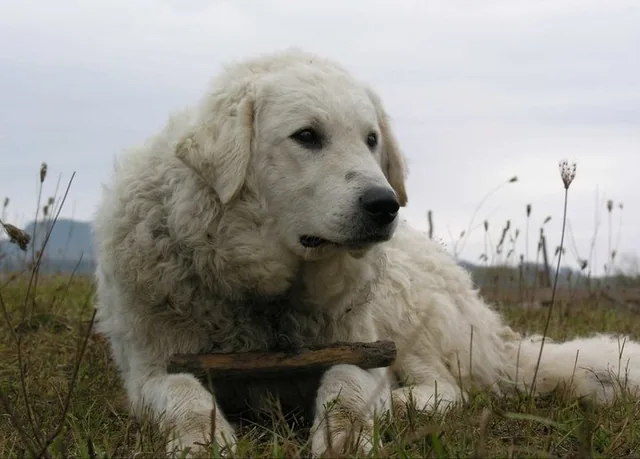
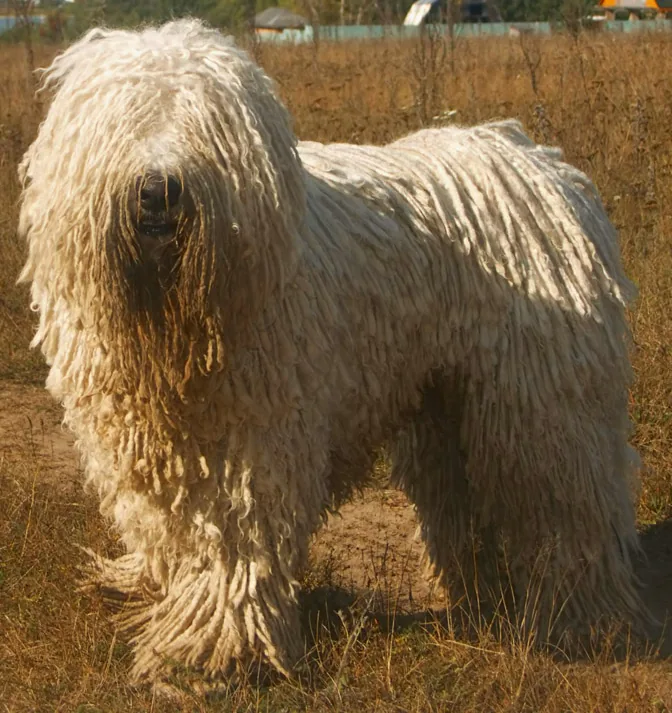
The Komondor is a big, powerful Hungarian livestock guardian, instantly recognisable by its long white cords that resemble dreadlocks. It is considered a national treasure in Hungary.
Bred to think for itself, it is steady and quiet when all is well and decisive when danger appears. It is a serious guardian, not a casual pet.
History
The Komondor arrived in Hungary with the Cumans, a nomadic people who settled there in the 12th and 13th centuries, and its name is thought to mean 'dog of the Cumans'. The breed is believed to descend from Asian dogs of Tibetan type, and its name appears in writing in 1544.
It developed separately from the Kuvasz, the other Hungarian guardian, and many dogs were lost during World War II. Today it is fairly common in Hungary and is also used to guard sheep and goats in North America.
Appearance
A very large dog, males commonly 70 to 80 cm or more at the withers and females somewhat smaller, with a strong, muscular, slightly rectangular body and a broad head. Nose and lips are black.
The all-white coat forms natural cords of about 20 to 27 cm over roughly two years. Puppies are soft and fluffy, and the cords protect the dog from weather, vegetation and the bites of predators.
Temperament
Calm and watchful with its own family, the Komondor is affectionate and gentle with children, and often protective of other household animals. It is wary of strangers and intolerant of trespassers.
It was bred to make decisions alone, so it can be independent and is not an eager-to-please dog. Early socialisation and firm, fair, experienced handling are essential. It is not suited to apartment life.
Care and exercise
The Komondor needs space, a secure fence and a job or territory to watch. It is active at night and patrols constantly, so it may bark after dark. Moderate daily exercise and mental engagement suit it.
The coat needs regular work: cords must be separated by hand as they form, and the dog must be dried thoroughly after bathing, which can take a couple of days. Shedding is minimal once cords are formed.
Health
The source records no breed-specific health problems, but like other large breeds it can be prone to hip dysplasia and bloat. Keep the cords clean and dry to avoid skin trouble.