Overview
The Kooikerhondje is a small, graceful Dutch sporting dog that dates back to the sixteenth century. It was developed to work in duck decoys, where its playful movements and bright white tail drew curious ducks into a trap.
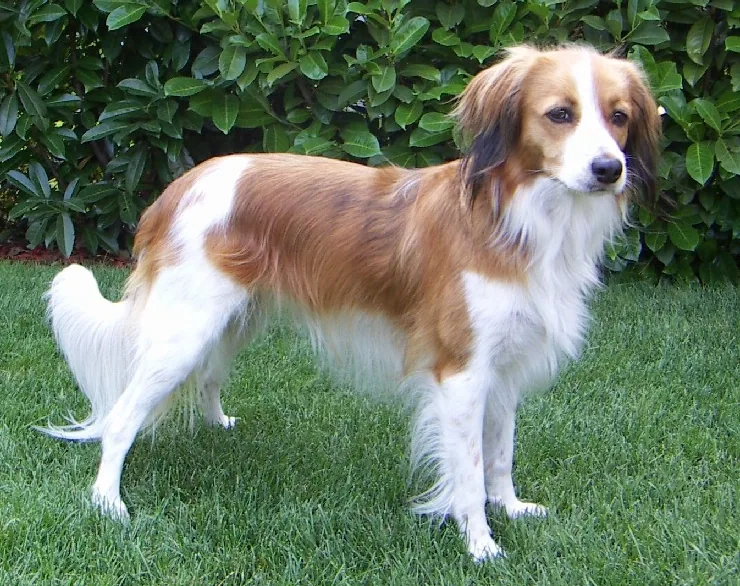
Today it is a cheerful family companion and sports dog. It is alert and agile, with an orange-red and white coat that makes it easy to recognise, and it has appeared in the work of Dutch masters.
History
The breed was developed in the Netherlands around the sixteenth century to lure ducks into decoys, long tunnel-like traps. Hunters copied the way foxes attract ducks by playing near the water without meeting their gaze. The dog appears in paintings by Jan Steen, Rembrandt and Vermeer.
Numbers collapsed during World War II, and Baroness van Hardenbroek van Ammerstol is credited with rescuing the breed. The Dutch kennel club recognised it in 1971. It later spread abroad and was accepted by the American Kennel Club in 2018.
Appearance
The Kooikerhondje is small and spaniel-like, with a balanced, sturdy build. The wavy, medium-length double coat is white with orange-red patches, and the tail is a white plume. Some dogs have black tips on the ears, known as earrings.
The FCI standard allows heights of about 38 to 41 cm for males and 36 to 39 cm for females.
Temperament
The Kooikerhondje is friendly, lively and devoted to its family, though it may be reserved with strangers. It is alert and sensitive, and it responds best to gentle, positive training.
It is quick and agile, keen to learn and enjoys having a job to do, which makes it a good candidate for dog sports.
Care and exercise
This active little dog needs daily exercise and mental stimulation, such as games, scent work or agility. It is adaptable and can live in a home of almost any size as long as its needs are met.
The coat needs regular brushing, especially the feathering on the ears, legs and tail, but is not hard to maintain. Early socialisation and positive training help it grow into a confident adult.
Health
Heritable conditions reported in the breed include patellar luxation, von Willebrand's disease, necrotising myelopathy, renal dysplasia, inflammatory myopathy and ataxia. A Dutch study found patellar luxation in about one in four dogs, although prevalence has been falling. Health testing of breeding dogs is important.