Overview
The Danish-Swedish Farmdog is a compact all-round farm dog from Denmark and southern Sweden. It was kept for centuries to catch rats, watch the yard, help with hunting and move livestock.
Today it is a cheerful, intelligent family companion that shines in dog sports and enjoys having a job to do. It is small, but it has plenty of drive.
History
The breed probably took shape in Scania in southern Sweden and was long a standard working dog on Scandinavian farms. As industrialisation reduced the need for such dogs in the late 1800s, numbers dropped, and by the 1980s the breed was close to disappearing.
The Danish and Swedish kennel clubs worked together to save it, and it was recognised in both countries in 1987. It appeared at the World Dog Show in 1989 and was officially recognised by the American Kennel Club in 2025.
Appearance
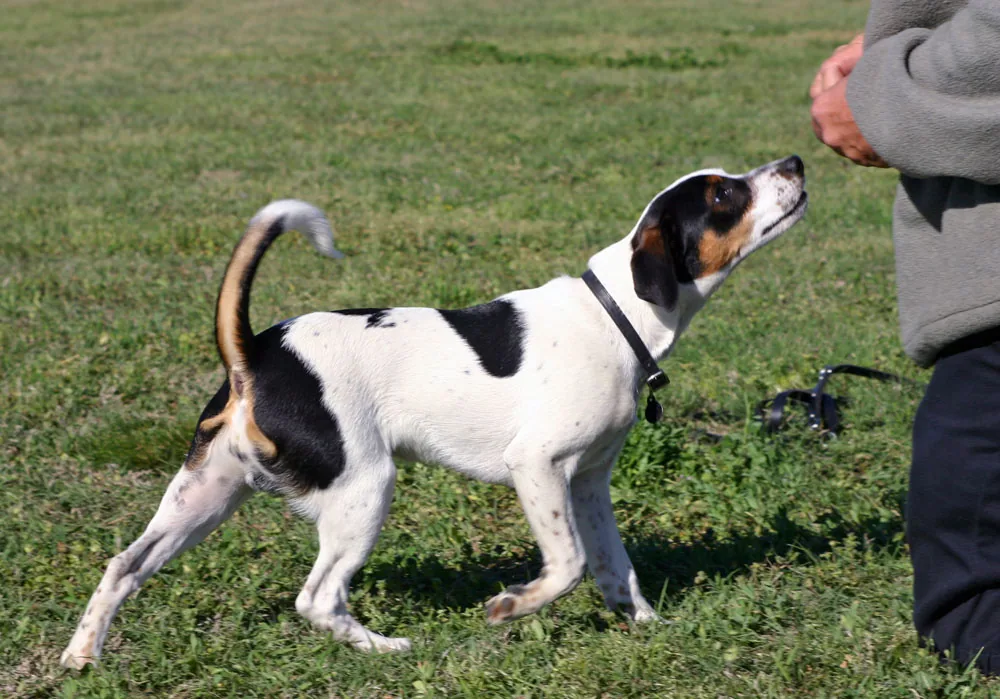
A sturdy small dog, 30 to 39 cm tall, with a body slightly longer than it is tall. The head is rather small and triangular with a clear stop.
The coat is short, hard and smooth, predominantly white with one or more patches of colour. The tail may be long, half-bobbed or a bobtail.
Temperament
This breed is lively, friendly and keen to work with its people. It is alert and will announce visitors, but it is not aggressive. Most are playful and affectionate with family and good with children when well socialised.
Its terrier-like drive means it may chase small animals, and it needs mental activity to stay content. Bored dogs may become noisy or inventive in unwanted ways.
Care and exercise
The farmdog needs daily walks, play and some training or sport such as agility or rally. It adapts to house life as long as it receives enough activity and company.
The short coat is easy to maintain, needing only occasional brushing. Check ears, teeth and nails routinely. Early socialisation and positive training suit its sensitive, eager nature.
Health
Generally a robust breed. Breeders watch for the usual small-dog issues such as dental problems and slipping kneecaps, and responsible breeders test for hereditary conditions.