Overview
The American Bully was created in the late twentieth century as a companion dog with the heavy, muscular look of the bully breeds. It is built for strength but was bred for a calmer, less game temperament than its terrier ancestors.
It needs a knowledgeable, responsible owner who can train and control a powerful dog. Rules on ownership vary and some countries restrict or ban the breed or its XL type.
History
Development began in the 1980s from American Pit Bull Terrier stock, with American Bulldogs, English Bulldogs and Olde English Bulldogges added to gain a stockier build. Most of the look was settled in the 1990s.
The American Bully Kennel Club recognised it in 2004 and the United Kennel Club in 2013. Major bodies such as the FCI, AKC and UK Kennel Club do not. XL dogs imported to the UK from 2014 led to a ban under the Dangerous Dogs Act in 2024.
Appearance
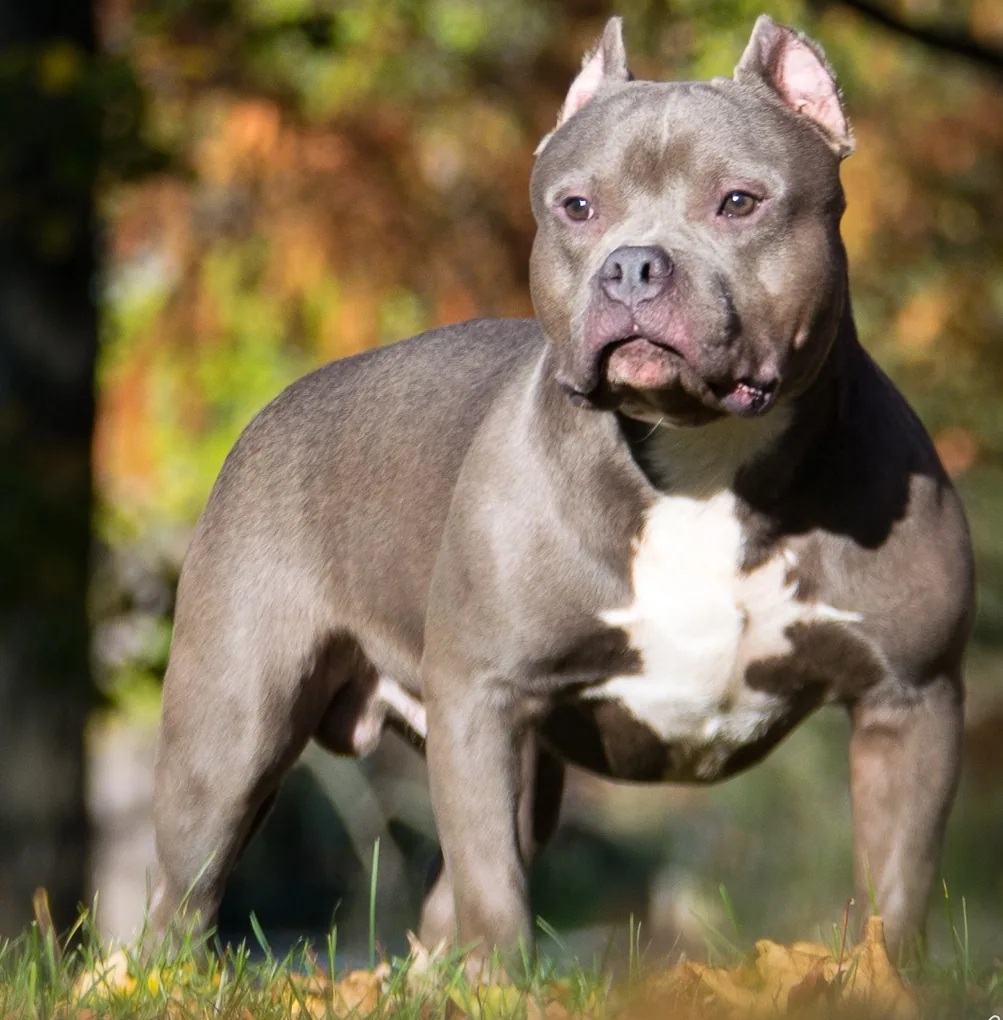
A compact, heavily muscled dog with a broad chest, heavy bone and a blocky head. The ABKC recognises Pocket (males about 36 to 43 cm), Standard (43 to 51 cm), XL (53 to 58 cm) and the lighter-framed Classic.
The short coat comes in a wide range of colours and patterns. Some dogs are bred smaller or larger than the official classes, but those sizes are not recognised.
Temperament
Many are affectionate, people-focused and happy lapdogs at home, and breed standards discourage human aggression. Temperament depends strongly on breeding, socialisation and training.
Because of their power, they need early, consistent training and careful supervision, especially around other dogs and unfamiliar people.
Care and exercise
Daily exercise such as walks and play, with activities like weight pulling or flirt pole, keeps them fit. They also need mental stimulation and a firm but fair hand.
Grooming is simple: occasional brushing. Check local laws on ownership, muzzling and registration before getting one.
Health
There is little health data because the breed is new. A congenital form of ichthyosis is known, and exaggerated builds can bring hip dysplasia, breathing problems and heat intolerance. Some UK lines are very inbred.