Overview
The Shar Pei comes from southern China, where it was kept as a property guardian. Its name means sand skin, referring to its harsh, short coat.
It is a dignified, independent and quiet dog, devoted to its family and wary of strangers. Wrinkles make it distinctive but also bring care needs.
History
The breed's exact origin is unknown, but it resembles guard dogs shown in Han dynasty effigies and is considered an ancient type related to the Chow Chow. Political turmoil in the twentieth century left it close to extinction.
In 1973 a Hong Kong breeder appealed for help, and by 1978 it was named the world's rarest breed. American breeders built up the population, and the AKC recognised it in 1992. Some Hong Kong breeders keep the traditional bone-mouth type.
Appearance
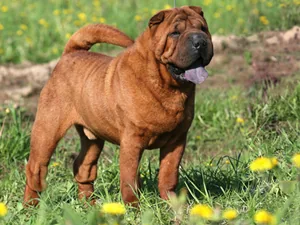
The Shar Pei stands about 44 to 51 cm and weighs roughly 16 to 20 kg. It has deeply wrinkled skin, a large head with a padded muzzle, small triangular ears and deep-set eyes. The tongue is blue-black and the tail curls over the back.
Temperament
Shar Peis are calm, proud and independent. They are loyal to their family but aloof with strangers and can be dominant with other dogs.
They need early socialisation and patient, consistent training. They are usually clean and quiet.
Care and exercise
Exercise needs are moderate, with daily walks and play. The short coat is easy to brush, but wrinkles and ears should be kept clean and dry to avoid infection.
They do best with an owner who understands independent breeds.
Health
The breed is prone to skin problems, entropion, ear infections, glaucoma, hypothyroidism, elbow dysplasia and familial Shar Pei fever, which can lead to amyloidosis. Choose breeders who screen for these conditions.