Overview
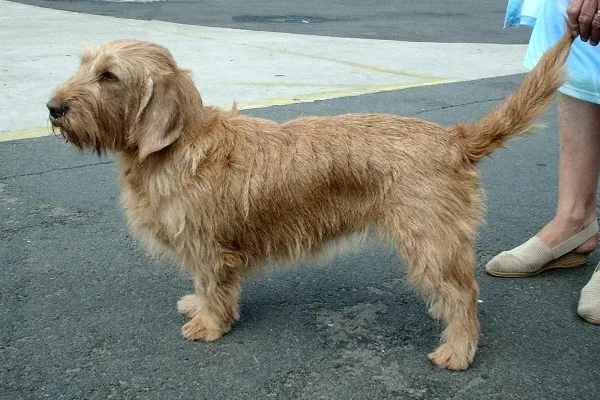
The Basset Fauve de Bretagne is a compact, short-legged scenthound from Brittany in north-western France. Its harsh, fawn-coloured coat and lively expression make it easy to recognise.
Bred to follow game through rough cover, it is tough and enthusiastic outdoors, yet affectionate and companionable at home. Numbers are modest, but the breed has a loyal following in France, the UK and elsewhere in Europe.
History
The breed was developed in Brittany from the larger Grand Fauve de Bretagne, a hunting hound that is now extinct. The smaller size suited hunters on foot working through thick undergrowth.
A story that the breed nearly vanished after the Second World War and was rebuilt with wirehaired Dachshunds is denied by the French breed club, which says numbers never fell so low. The breed has since become a show dog and pet in the UK, and the American Kennel Club fully recognised it in 2026.
Appearance
A smallish hound built on basset lines, but lighter and longer in the leg than the Basset Hound, with the shortest back of the basset breeds. It stands about 32 to 38 cm tall.
The coat is very harsh and dense, in red-wheaten or fawn shades, sometimes with a white mark on the chest. The ears are short, fine, darker and finely pleated, reaching about to the end of the nose. The eyes and nose are dark.
Temperament
This is a lively, good-natured hound with plenty of courage and stamina. It is friendly with people and usually gets on well with other dogs, especially when raised with them.
Like most scenthounds, it can be independent and easily led by its nose, so training needs patience, good humour and rewards.
Care and exercise
The Basset Fauve needs a good daily walk and loves to explore and sniff, so a secure garden and a lead in open country are important. It is energetic for its size and enjoys activity with its family.
The wiry coat repels dirt and does not mat easily, but weekly brushing and occasional stripping keep it tidy. Check the ears regularly, and keep nails trimmed.
Health
A 2006 study found a relatively low inbreeding level, among the lowest of nine French breeds studied. The breed is one of those more often affected by primary open angle glaucoma, for which a genetic test exists.