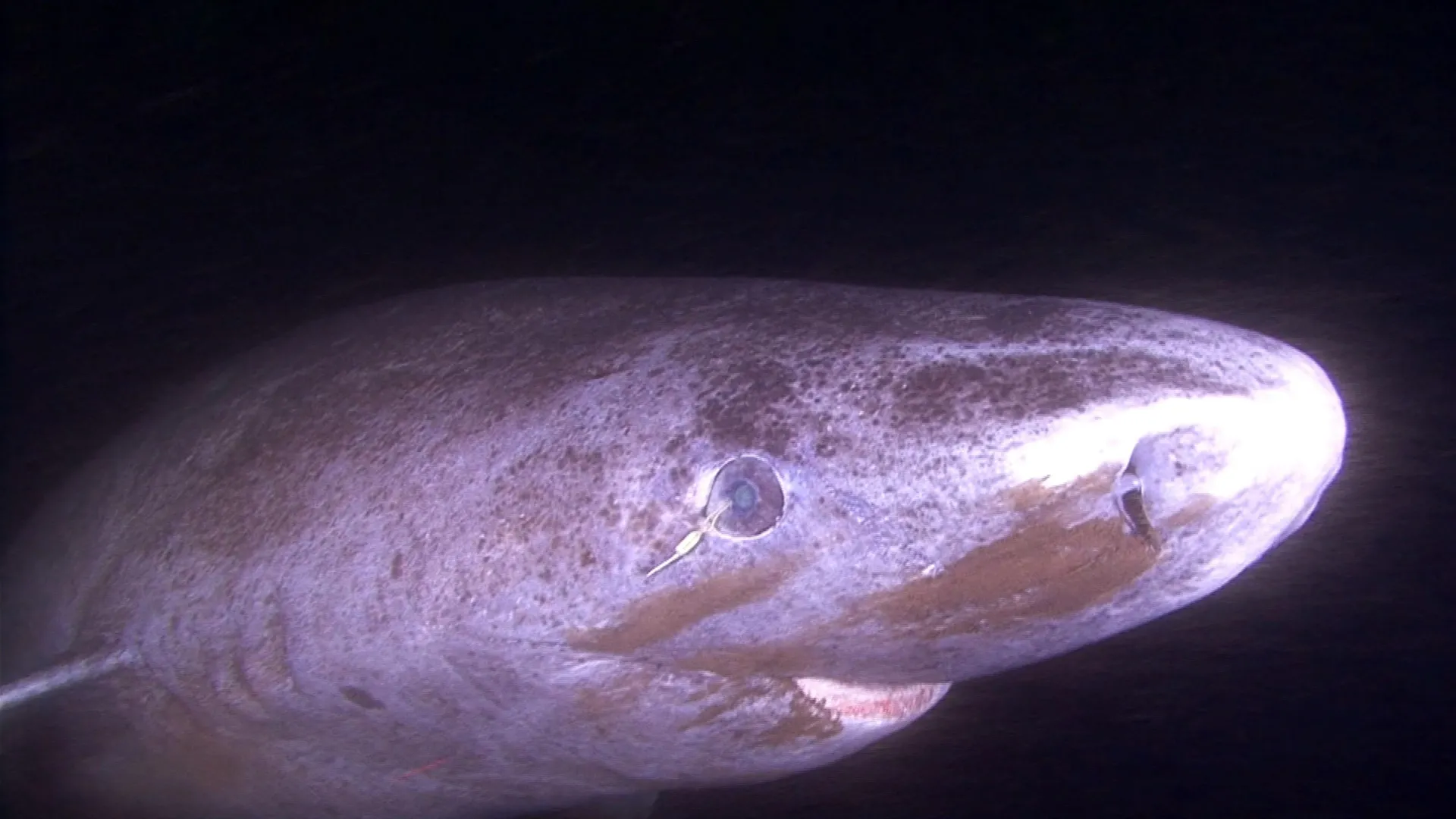
The Greenland shark, the longest-living vertebrate known to science at up to 400 years old, shows almost no age-related decline in its retinas, according to a new study led by UC Irvine researcher Dorota Skowronska-Krawczyk and published in Nature Communications.
Examining eyes from sharks caught between 2020 and 2024 near the University of Copenhagen's Arctic Station on Disko Island, Greenland, the team found no evidence of the retinal cell death that normally accompanies aging. A human living to 400 would be expected to lose 50-90% of their rod photoreceptors at typical age-related decline rates, yet the sharks' retinas stayed intact. Rhodopsin, the protein essential for vision in dim light, remained active and finely tuned to detect blue wavelengths in the deep, dark Arctic waters where the sharks live.
The researchers linked the effect to elevated activity in DNA-repair genes, including the ERCC1-XPF complex, which continually fixes cellular damage. Scientists say the findings could point toward new protective mechanisms against human age-related eye diseases such as macular degeneration and glaucoma.