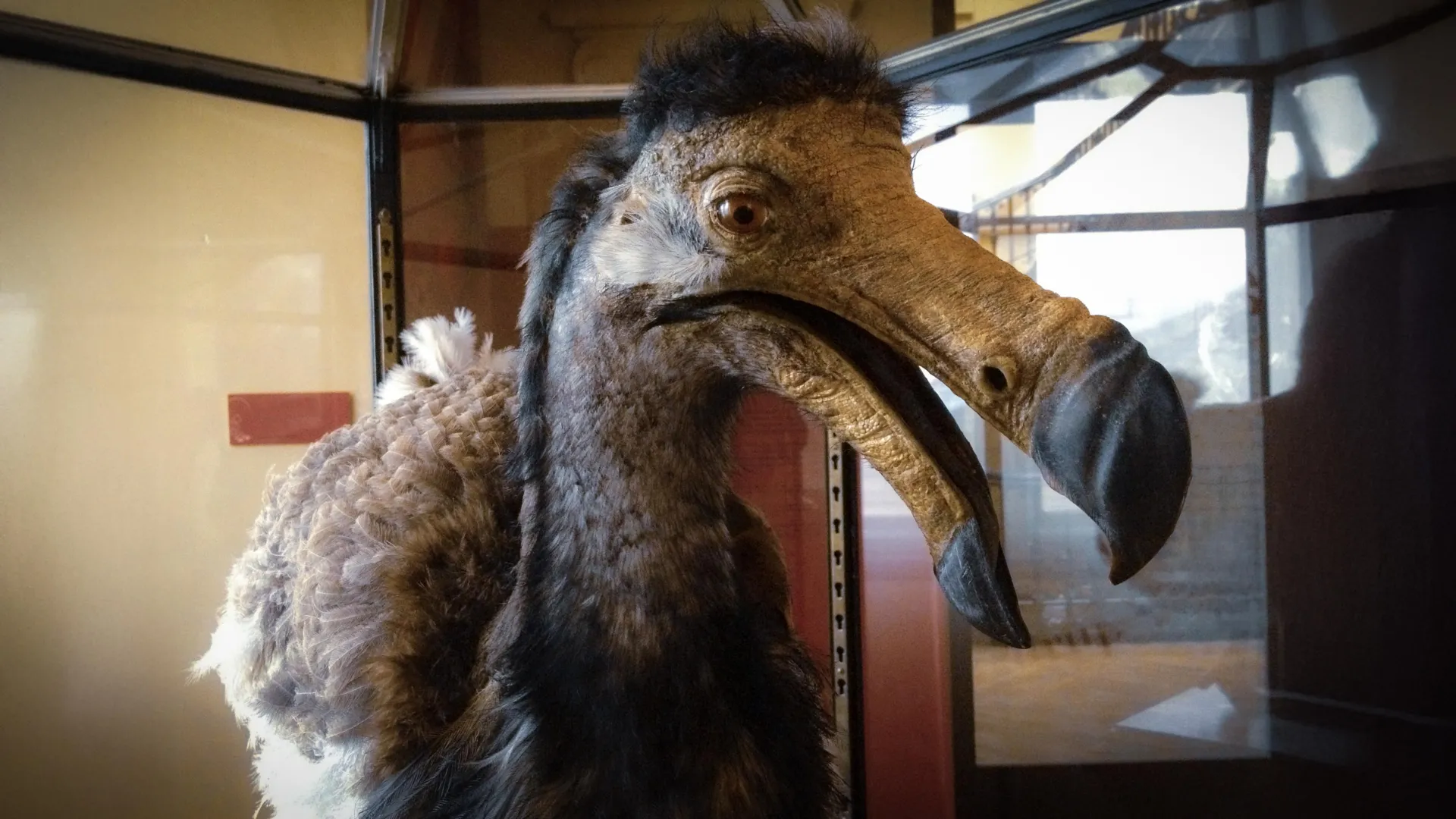
Researchers led by the University of Lethbridge and University of Copenhagen used high-resolution CT scanning to digitally reconstruct the brain cavities of the only two complete dodo skulls known to survive, held at the Natural History Museum Denmark and the Oxford University Museum of Natural History.
The scans show the dodo's olfactory bulbs made up roughly 3.44% of its brain endocast volume, well above the proportion seen in pigeons and doves, the bird's closest living relatives. The team also found a large, sensitive upper beak suited to tactile foraging, and features suggesting the dodo may have been active at dawn and dusk rather than strictly during daylight.
"The dodo is one of the world's most recognizable extinct animals, yet surprisingly little is known about how it actually lived," said Peter Andrew Hosner, associate professor and curator of birds, who worked on the study. The findings, published in the Zoological Journal of the Linnean Society, challenge the dodo's popular reputation as a slow, dim-witted bird by pointing to a far more sensorially complex animal that navigated Mauritius largely by smell and touch.