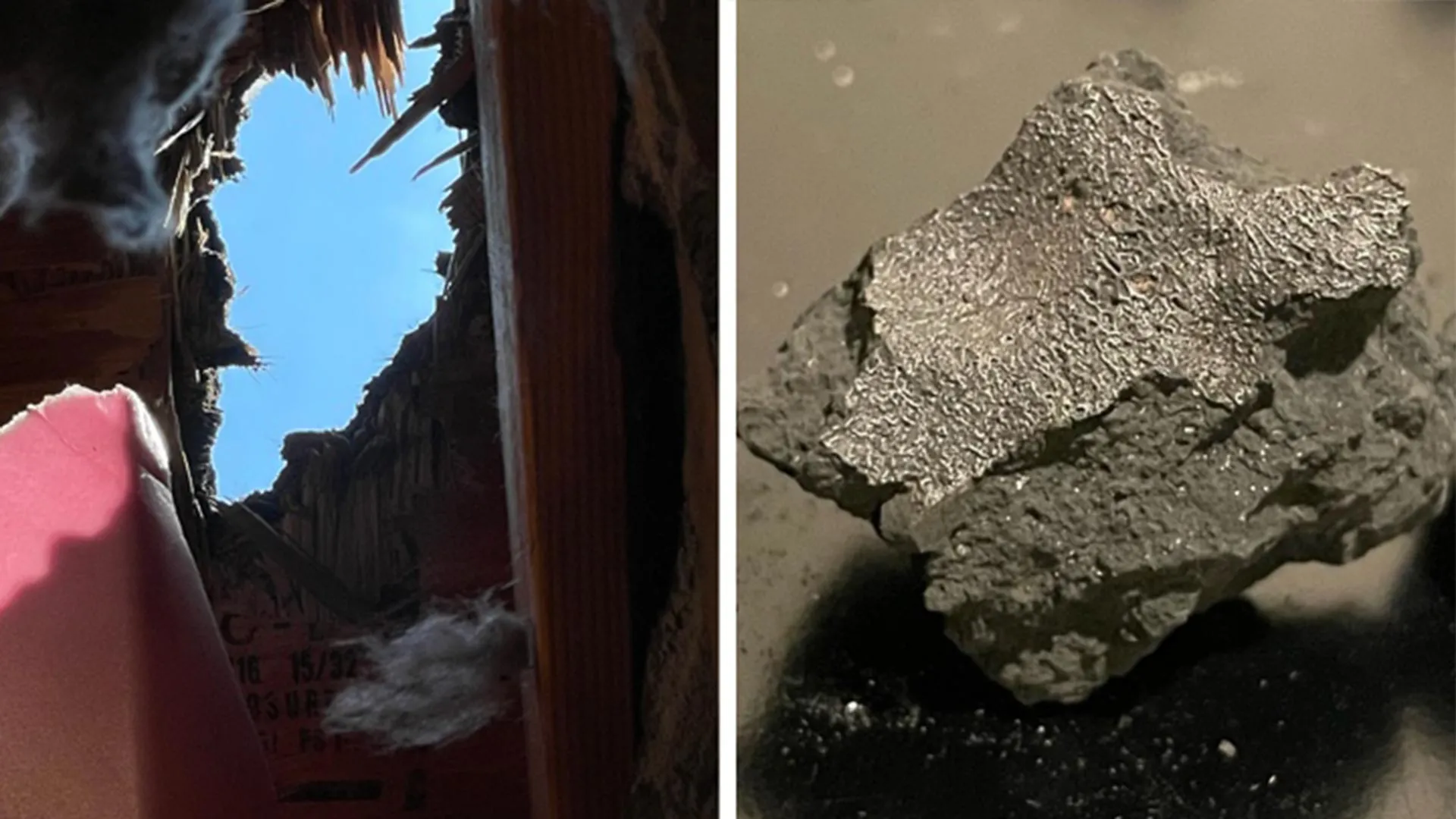
A meteorite that punched through the roof of a home in Hillsborough, New Jersey, on July 16, 2024, has turned out to be an exceptionally rare scientific find. Researchers led by Peter Jenniskens of the SETI Institute and NASA Ames determined the two-pound rock, which entered the atmosphere at roughly 32,000 mph, is a CM1/2 carbonaceous chondrite — only the second such fall ever witnessed and recorded, and the 22nd CM-type meteorite fall on record.
Analysis published in Science Advances found the fragments preserved ancient salty fluids alongside organic compounds and hundreds of amino acids, most of which do not occur naturally on Earth. The rock's chemistry — 1.8% carbon and 0.07% nitrogen by weight — points to a primitive asteroid parent body once soaked in briny water that likely helped drive the amino acid chemistry before it evaporated.
Because the sample was recovered so quickly after landing, it stayed remarkably uncontaminated, giving scientists a rare, pristine window into the organic material asteroids may have delivered to early Earth — chemistry that could have helped set the stage for life.