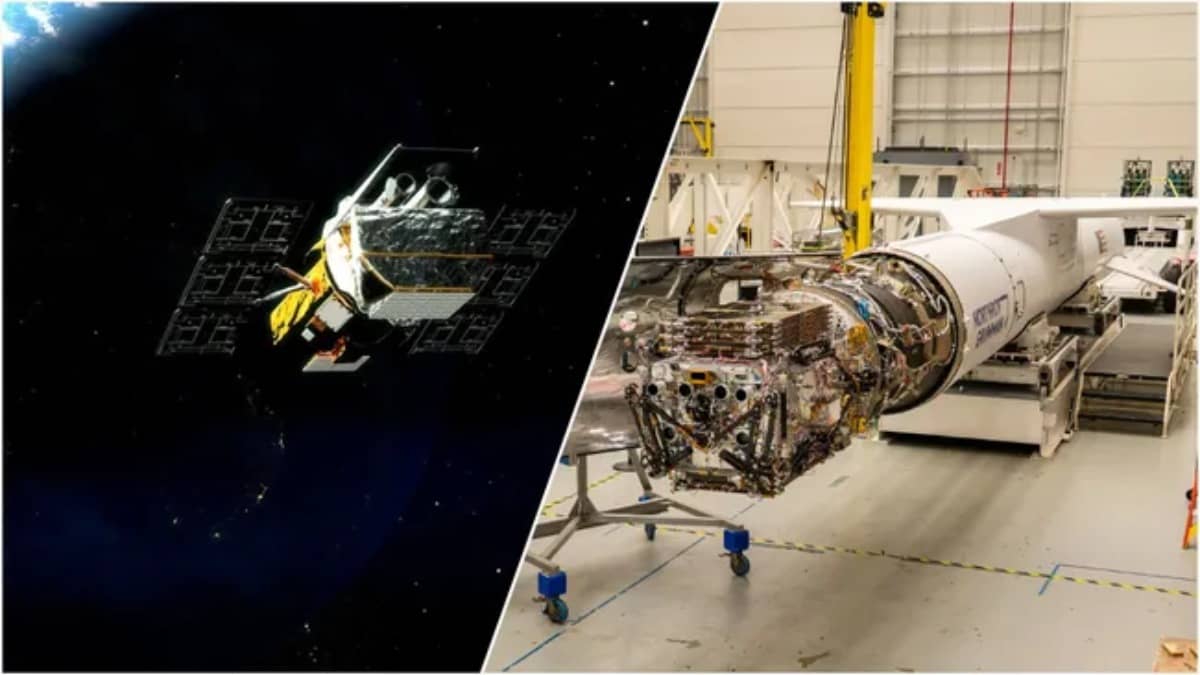
NASA is attempting to save one of its most productive space observatories from an uncontrolled reentry. The Neil Gehrels Swift Observatory, launched in 2004 to detect gamma-ray bursts — the universe's most powerful explosions — has been steadily losing altitude due to atmospheric drag amplified by heightened solar activity, falling from its initial 373-mile orbit to roughly 249 miles. Without intervention, Swift faces a 50% chance of reentry by mid-2026 and 90% by year-end.
In an unprecedented move, NASA awarded Arizona-based startup Katalyst Space Technologies a $30 million contract to build a robotic rescue craft called LINK. Launching aboard a Northrop Grumman Pegasus XL rocket — air-deployed from a Stargazer aircraft at NASA's Wallops Flight Facility — LINK will autonomously rendezvous with Swift, attach to it, and fire Hall-effect thrusters to push the observatory into a safer, higher orbit. Swift was never equipped with its own propulsion system, making it entirely dependent on the rescue craft.
If successful, this will mark the first time a privately developed robotic spacecraft has autonomously docked with and repositioned an operational U.S. government science satellite not originally designed for servicing. NASA officials have called it "a fast-paced, high-risk mission with no room for major delays."