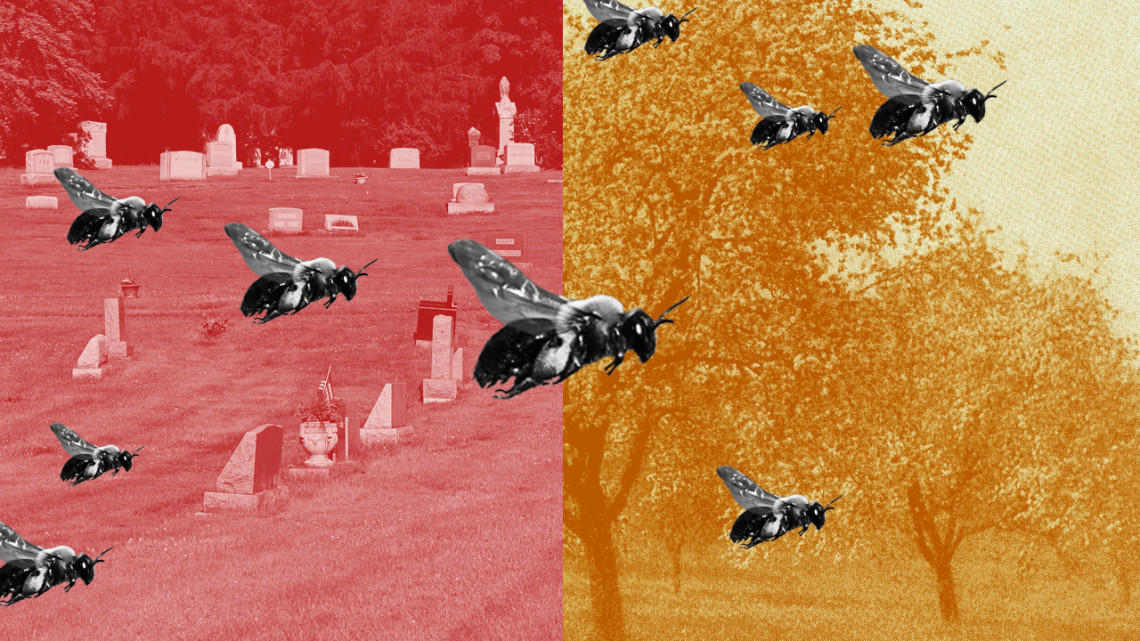
Researchers at Cornell University have documented an estimated 5.5 million wild bees nesting beneath East Lawn Cemetery in Ithaca, New York, packed into just 1.5 acres of undisturbed sandy soil. Reported in the journal Apidologie, it is described as the largest and oldest known aggregation of ground-nesting bees in the world.
The bees are Andrena regularis, a solitary mining bee, and were first noticed in spring 2022 by lab worker Rachel Fordyce; the study was led by undergraduate Steve Hoge under entomologist Bryan Danforth. The colony density rivals more than 200 honeybee hives and outnumbers Manhattan's human population by over threefold. Evidence suggests the bees have used the site for more than a century, since at least the early 1900s.
The researchers warn that such pollinator strongholds are fragile: paving over the nesting ground could wipe out millions of important spring pollinators in an instant. The find underscores how undisturbed soil in cemeteries and other green spaces can quietly harbor vital biodiversity.