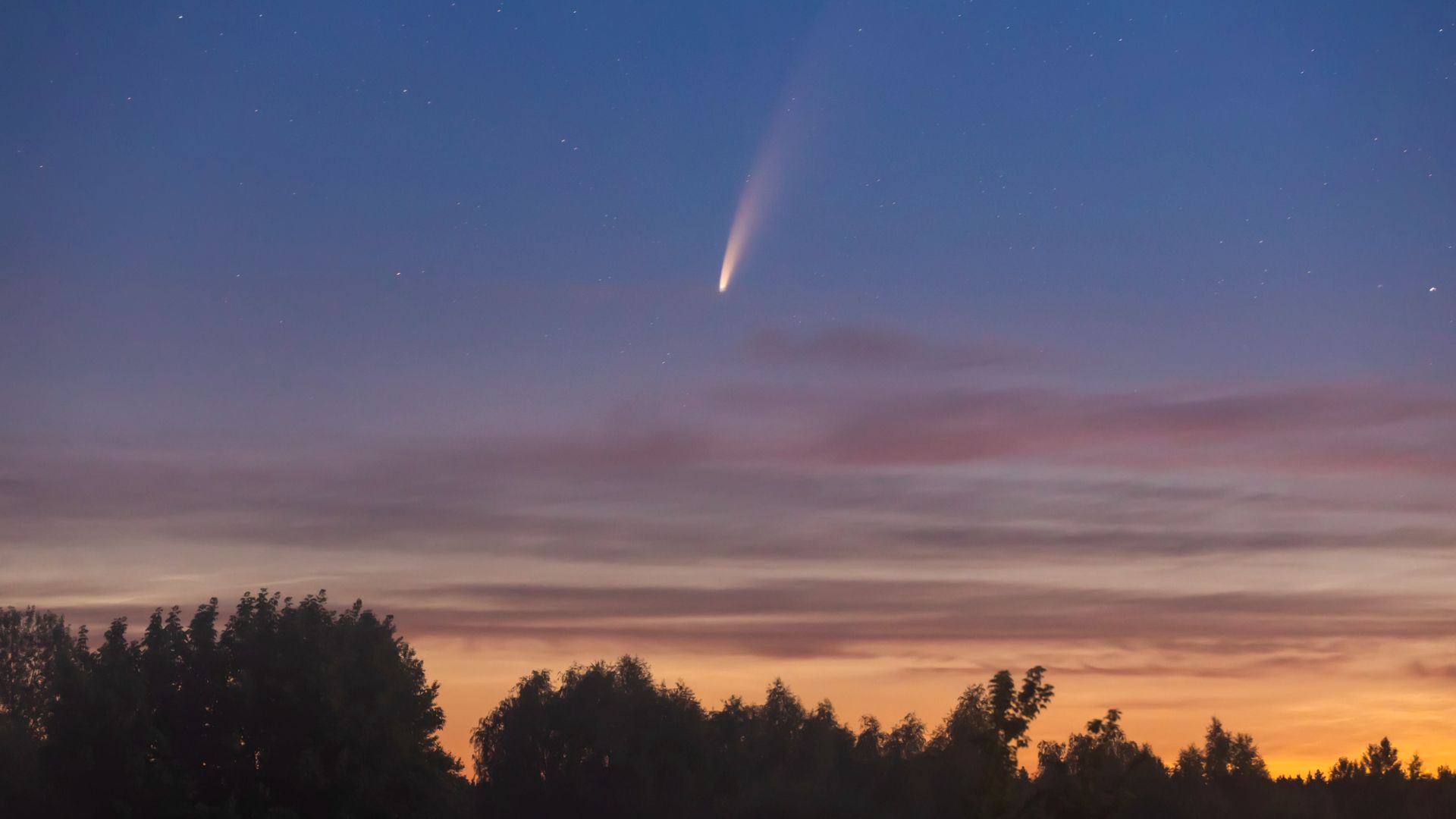
Comet C/2025 R3 (PanSTARRS), discovered by Hawaii's Pan-STARRS survey telescope in September 2025, has brightened to magnitude 5.2 — near the threshold of naked-eye visibility — as it races toward its closest approach to the Sun on April 19. The comet will pass within 45.5 million miles of the Sun before swinging closest to Earth on April 26 at just 44.6 million miles.
Astronomers predict the comet could reach magnitude 3–4 at peak, easily visible to the naked eye under dark skies. An optimistic scenario involving forward scattering — where sunlight scatters off comet dust at just the right angle — could boost brightness by up to 100 times, potentially pushing it to magnitude −0.5, rivaling the brightest stars. Northern Hemisphere observers should look in the predawn sky through April 25, when the comet travels through Pegasus, Pisces, and Aries before fading into the Sun's glare.
The comet is currently best viewed with binoculars in the morning sky about an hour before sunrise. As it approaches perihelion and peak brightness around April 19–26, it may become one of the most spectacular comets since Tsuchinshan-ATLAS in 2024.