Overview
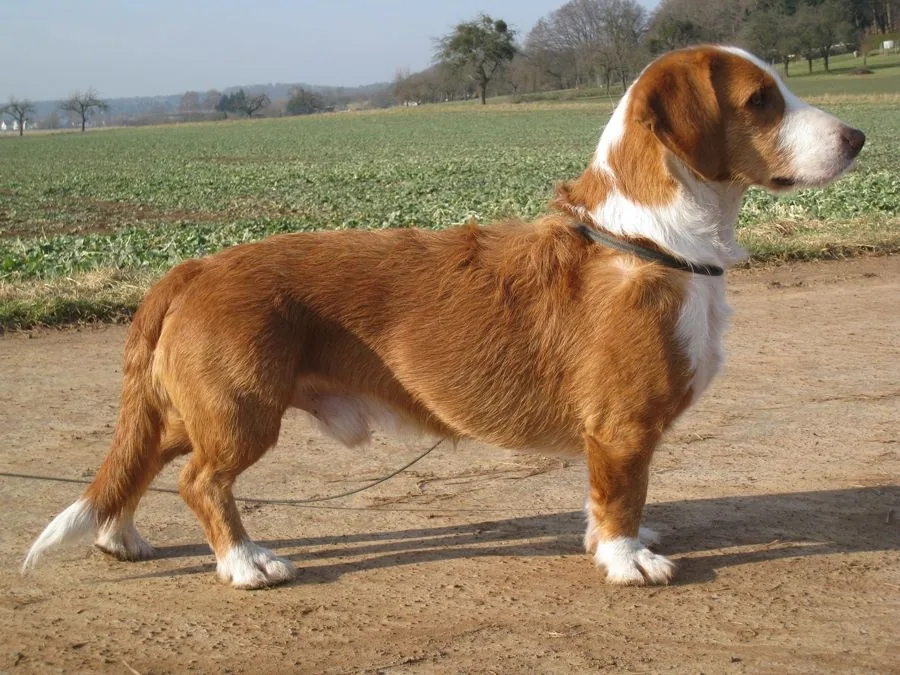
The Westphalian Dachsbracke is a compact, short-legged scenthound from Westphalia in Germany. It is essentially a small version of the German Bracke, built low to the ground for tracking.
It is seldom seen today, even at home. It is best known as the ancestor of the Swedish Drever.
History
The breed was first described as a variety of German hound in 1886 and was recognised by the German Kennel Club under its present name in 1935. The FCI lists it as No. 100 among the small hounds.
It probably arose by crossing long-legged Bracken with Dachshunds. Sweden used it to develop the Drever, which has largely taken over its hunting work.
Appearance
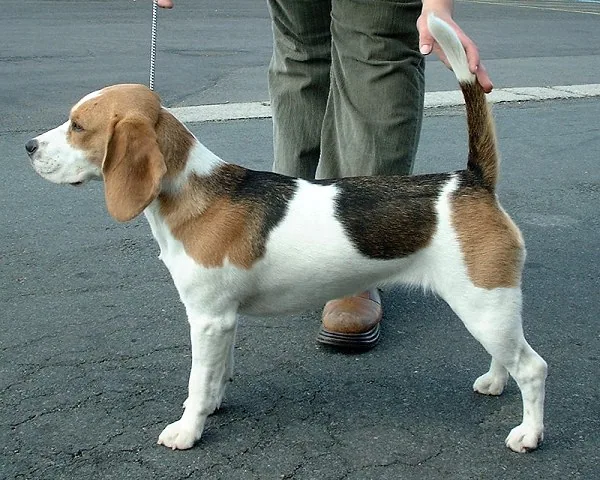
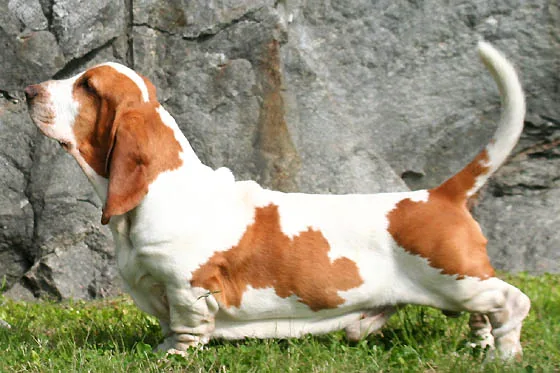
This is a small hound standing about 30 to 38 cm at the withers, with short legs, medium-long drooping ears and a long, high-set tail carried upward. The chest is narrower than a Dachshund's and the legs a little longer.
The short coat is usually red to yellow with a black saddle and white Bracken markings on the muzzle, chest, legs, collar, tail tip and a blaze.
Temperament
Bred to track by scent, it is persistent and independent on a trail and calm in the home when its needs are met. Like most hounds, it uses its voice when working.
Care and exercise
It needs regular walks with a good opportunity to follow scents safely, ideally in a secure area or on a lead. The short coat needs only occasional brushing, plus routine care of the drooping ears.