Overview
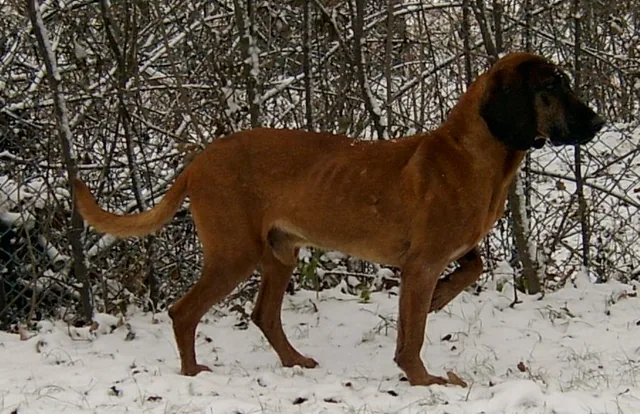
The St. Hubert Jura Hound is a medium-sized scenthound from the Jura Mountains along the French-Swiss border. It is black and tan with no white markings at all, and it looks a lot like the slightly smaller Bruno Jura Hound.
It is a working hunting dog, valued for a powerful nose, surprising speed and nimbleness over rough mountain ground. It is rare outside its home region and best suited to people who hunt or can give it real work to do.
History
The breed comes from the Jura Mountains, where hunters needed a hound that could follow quarry on foot over steep, wooded country. It is closely related to the Bruno Jura Hound and to neighbouring French hounds, and all of them are believed to descend from the old St. Hubert Hound.
In the Swiss part of the Jura it has long been used by hunters who pursue game on foot rather than on horseback.
Appearance
A sturdy, medium-sized hound with a black and tan coat and no white anywhere. Compared with the Bruno Jura Hound, it has clearly more pendulous flews and more dewlap, which gives the face a heavier, more classic St. Hubert expression.
Temperament
Like most scenthounds, it is driven and determined once it picks up a scent. It is generally steady with people and used to working alongside other hounds, but it is first and foremost a hunter and can be independent and single-minded outdoors.
Care and exercise
This hound needs plenty of vigorous exercise and a job that lets it use its nose. A secure garden and a long lead or reliable fencing are important, since a trail can lead it far away. Its short coat is easy to keep, needing only occasional brushing, and its long ears should be checked and cleaned regularly.
Health
Little breed-specific health information is available. As with other long-eared, deep-chested hounds, ear infections and bloat are sensible things to watch for.