Overview
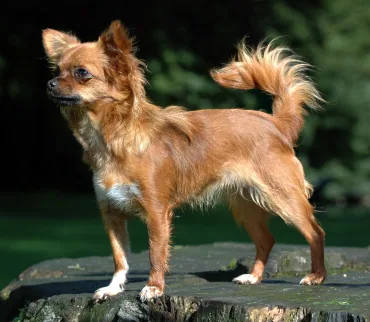
The Russian Toy is a tiny, elegant dog developed in Russia from the English Toy Terrier. It comes in a smooth coat and a long coat with feathered ears, legs and tail.
It is cheerful and devoted, and often compared with the Chihuahua, though the two are not closely related.
History
English-style toy terriers were kept by Russian nobility, and the breed was shown in Saint Petersburg in the early 1900s. After the Revolution it nearly vanished because of its link to the aristocracy, and breeders rebuilt it from few dogs.
The long coat began with a puppy named Chikki, born in 1958. The two varieties were joined under one standard in 1988, and the FCI recognised the breed provisionally in 2006 and fully in 2017.
Appearance
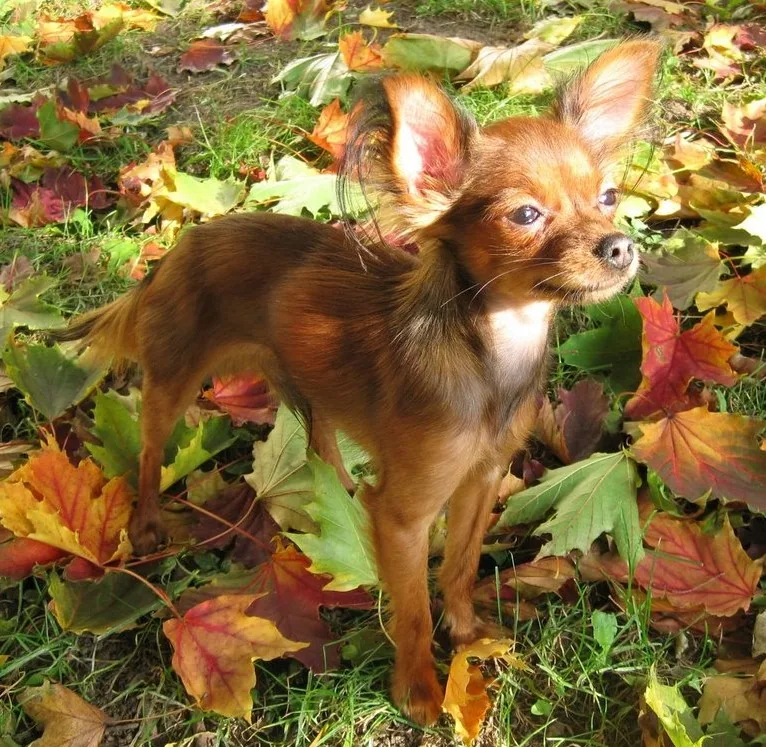
A very small, fine-boned dog with a small head, large round eyes and big triangular ears. Where docking is banned the tail is carried in a sickle curve.
It stands 20 to 28 cm and weighs 1.5 to 4 kg. The smooth coat is short and shiny, while the long coat has fringed ears, legs and tail.
Temperament
Cheerful, bright and very attached to its family, whatever its age. It is protective and can be wary of strangers.
Originally a rat catcher and watchdog, it can be vocal and will announce visitors.
Care and exercise
Short daily walks and play meet its needs, and it adapts well to flats. Keep it warm in cold weather and handle gently, since its slender bones can break easily.
Brush the long coat a few times a week. Dental care matters.
Health
Retained baby teeth often need veterinary removal. Kneecap luxation can occur, and the fragile bones are prone to fractures. Little breed-specific health data exists outside Russia.