Overview
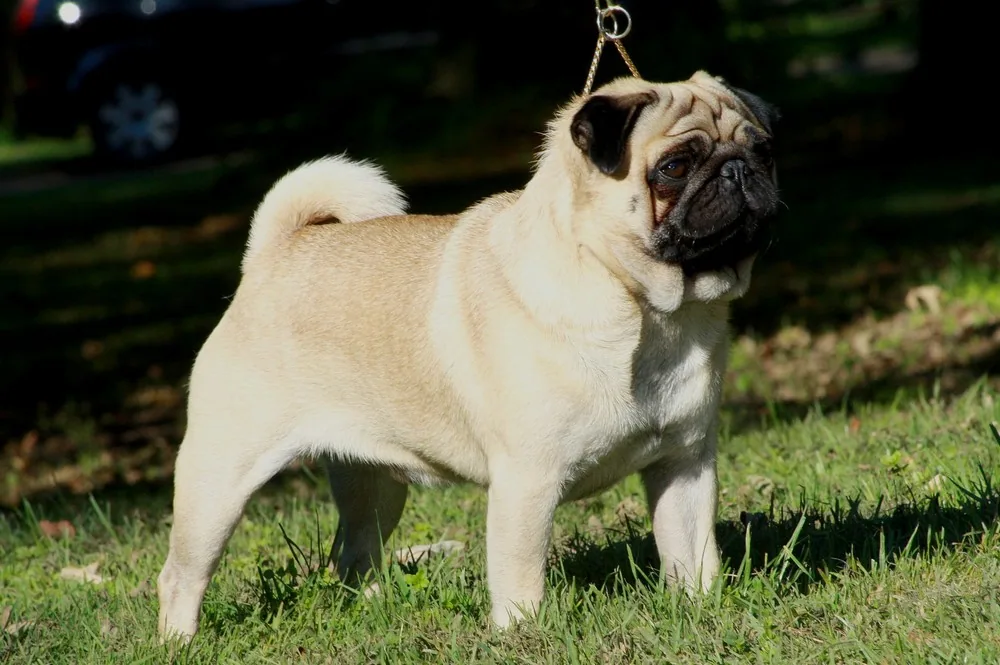
The Pug is a small, square, muscular dog with a flat face, deep wrinkles and a tightly curled tail. Its motto is much in little: a lot of dog in a small space.
It was bred purely as a companion and remains sociable, gentle and happiest close to its people.
History
The Pug's ancestor was the short-coated Lo-sze of the Chinese imperial court, kept in luxury by emperors and later by Tibetan monks. Dutch traders brought them to Europe in the sixteenth century, where they became favourites of the House of Orange and the Stuarts.
They appeared in the art of Hogarth and Goya, and Queen Victoria bred many. Imports from Beijing in 1860 gave the modern shorter nose and legs.
Appearance
Pugs have a cobby, compact body, deep chest and well-developed muscles. The head is round with a blunt, very short muzzle, dark eyes and either rose or button ears, with button preferred. The tail curls tightly over the hip.
The coat is fine, smooth and glossy. Fawn, apricot and silver fawn have a black mask and a trace line down the back.
Temperament
Pugs are sensitive, eager to please and famous for following their owners from room to room, which earns them the name shadows. They are playful, charming and usually good with children and other pets.
They crave attention and do not like being left alone for long. Some can be stubborn, but food rewards help training.
Care and exercise
Pugs need moderate exercise: short walks and play. Avoid heat and strenuous activity, as their flat faces make breathing and cooling hard. They love food and gain weight easily, so measure meals carefully.
Clean facial wrinkles regularly and brush the short coat weekly, as they shed a good deal.
Health
Their short muzzles make Pugs prone to breathing problems, heat intolerance and snoring. Eye injuries, skin fold infections, dental crowding and joint problems are also seen. Keeping a Pug lean, cool and well-checked helps, and choosing a puppy with a slightly longer muzzle is wise.