Overview
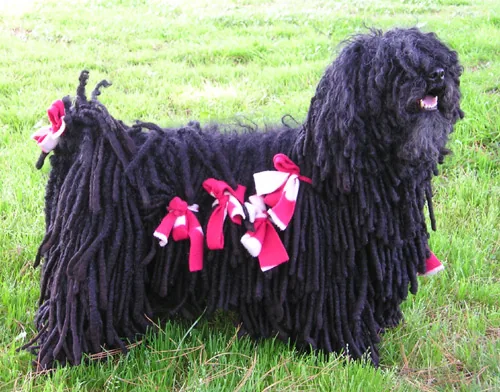
The Puli is a Hungarian herding dog known for its long, corded coat that resembles dreadlocks. It is smaller than the better-known Komondor, another Hungarian breed it traditionally worked beside.
It is intelligent, energetic and devoted, and it does best with an active owner and room to move.
History
The Magyars probably brought the Puli to Hungary in the 9th century, and it has worked as a sheepdog on the Hungarian plain since. Shepherds valued it highly, sometimes paying a year's wages for one.
The Puli herded by day, while the larger Komondor guarded the flock at night. As farming changed in the 20th century, the Puli moved into homes. Four Pulis were imported to the United States in 1935 for herding trials.
Appearance
A compact, agile dog standing about 40 cm tall, with a heavy corded coat that can grow long enough to reach the ground or be clipped short. The tail curls over the back.
The coat is usually black, but white, grey and cream (fakó) also occur. Despite the bulk of coat, the Puli is quick and nimble and changes direction fast.
Temperament
Pulis are bright, fun-loving, courageous and devoted, with a tendency to be wary of strangers and protective of home. They are sensitive and can be strong-willed and independent.
Training should begin young, as adult Pulis are harder to shape. Without enough exercise and tasks they may turn restless, overactive or aloof.
Care and exercise
They need plenty of exercise and mental activity, and a home with a garden suits them best. They enjoy agility, obedience, herding and flyball.
Cords need regular attention to keep them separated, clean and tidy, or the coat can be clipped short for easier care. The breed sheds very little.