Overview
The Australian Cattle Dog was developed to drive cattle over long distances across harsh, rough country. It is compact, muscular and built for stamina, with a weatherproof coat that is easy to look after.
It is a dog for active people who enjoy a challenge. Given plenty of work, exercise and training it is a devoted companion; left bored, it can become destructive and pushy.
History
In the mid 1800s, pastoralist Thomas Simpson Hall crossed imported blue-speckled Highland collies with dingoes to create hardy dogs for Australian cattle work, later called Halls Heelers. Brothers Jack and Harry Bagust developed them further in Sydney in the 1880s.
Those lines led to the modern Australian Cattle Dog and the related Australian Stumpy Tail Cattle Dog. The names Blue Heeler and Red Heeler come from the dog's colour and its way of nipping at the heels of reluctant cattle.
Appearance
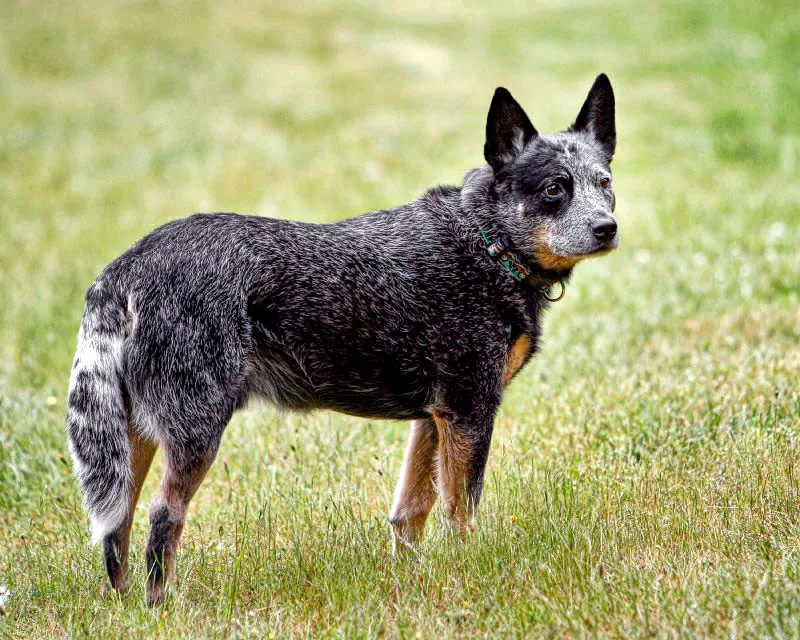
A sturdy, muscular, slightly longer-than-tall dog with a broad skull, strong muzzle, pricked ears and dark oval eyes with an alert, keen look. Males stand about 46 to 51 cm and females 43 to 48 cm.
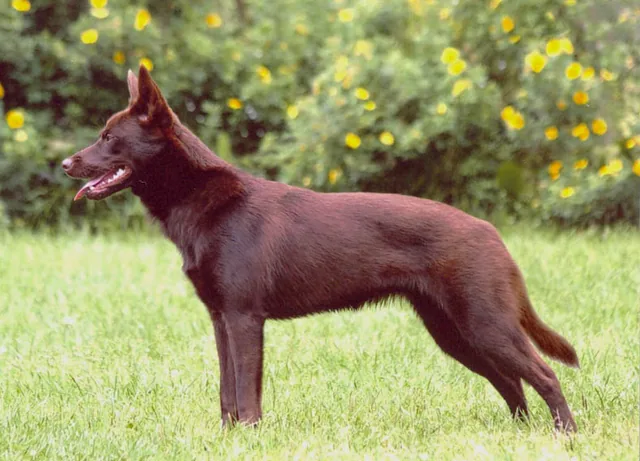
The short, dense double coat is either blue, mottled or speckled, often with tan points, or evenly speckled red. Puppies are born white and the colour comes through at around four weeks.
Temperament
Intelligent, alert and fiercely attached to its people, the Cattle Dog often shadows its owner all day. It is wary of strangers and can be protective, which makes it an effective watchdog.
It was bred to herd by nipping, and may try this on running children, so early socialisation and firm, fair training are essential. It does best with considerate older children.
Care and exercise
This breed needs vigorous daily exercise and real mental work such as herding, agility, obedience or trick training. A bored Cattle Dog finds its own jobs, usually unwelcome ones.
Grooming is easy: a weekly brush, more often during the seasonal shed. Start socialisation and training early, and give it a secure yard, as it can be an escape artist.
Health
Inherited deafness and progressive retinal atrophy, which leads to blindness, are the best-known hereditary concerns, so responsible breeders test for them. Active dogs are also prone to accidental injuries.