Overview
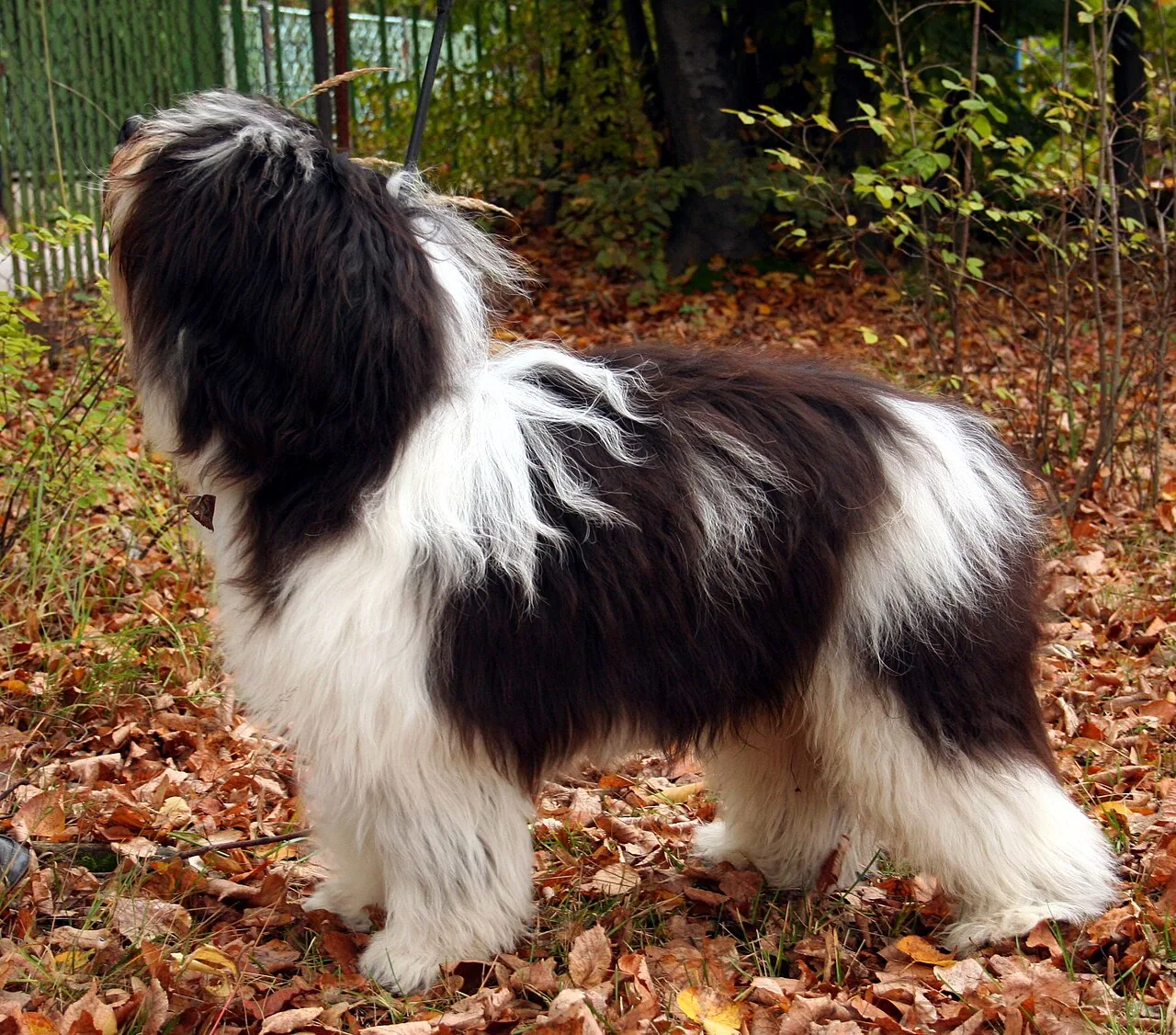
The Polish Lowland Sheepdog, or PON, is a medium-sized herding breed from Poland, easily recognised by its thick, tousled coat and the hair that falls over its face.
It is clever, self-assured and adaptable, which makes it a capable working dog as well as a popular companion, including for people living in town flats.
History
The PON has been known in Poland in roughly its present form since at least the thirteenth century. It is thought to descend from Hungarian and Tibetan shaggy dogs crossed with local herding dogs, and a legend even makes it a forebear of the Bearded Collie.
The Second World War nearly wiped the breed out. Its revival in the 1950s is credited mainly to Dr. Danuta Hryniewicz and her dog Smok, who became the ancestor of today's PONs. The first official standard was accepted by the FCI in 1959, and the American Kennel Club recognised the breed in 2001.
Appearance
A muscular, slightly rectangular dog with a profuse double coat. The soft, dense undercoat is covered by a rough topcoat that is straight or wavy but never curly. Long hair around the head makes it look larger and usually covers the eyes.
Males stand about 45 to 50 cm at the withers and females about 42 to 47 cm. Tails are naturally short or of varying length, and docking is now banned in most of Europe.
Temperament
PONs are stable, confident and quick to learn, with an excellent memory. They can be trained well, but they may try to dominate an owner who is too soft or inconsistent.
They adapt to many living situations and bond closely with their family. Their herding heritage means they enjoy having a job to do.
Care and exercise
A moderate amount of daily exercise suits the PON, along with mental work such as obedience, agility, rally, tracking or herding games. The long coat needs regular brushing to prevent matting, especially around the head and behind the ears.
Firm, fair and consistent training from puppyhood works best. Some PONs are reported to do best on a lower-protein diet.
Health
Generally a healthy breed with a life expectancy of around 12 years or a little more. Breeding dogs should be checked for hip dysplasia and for eye problems such as progressive retinal atrophy.