Overview
The Carpathian Shepherd Dog is a large guardian breed that originated in the mountains of Romania. For generations it lived with shepherds and defended sheep and cattle against wolves, bears and thieves.
It is a confident, serious working dog with a calm manner at home and strong protective instincts. It does best in a rural setting with a job to do and an owner who understands guardian breeds.
History
Romanian farmers once kept livestock guardian dogs bred purely to suit their own needs, with no written standard. In 1979, a show in Bucharest featured 18 dogs of the Carpatin type, and the standard was refined from there.
A breed club was founded in 1998. The FCI gave provisional recognition in 2005 and full recognition in 2015. Dogs from the Rucăr area of Argeș County are regarded as important ancestors of today's breed.
Appearance
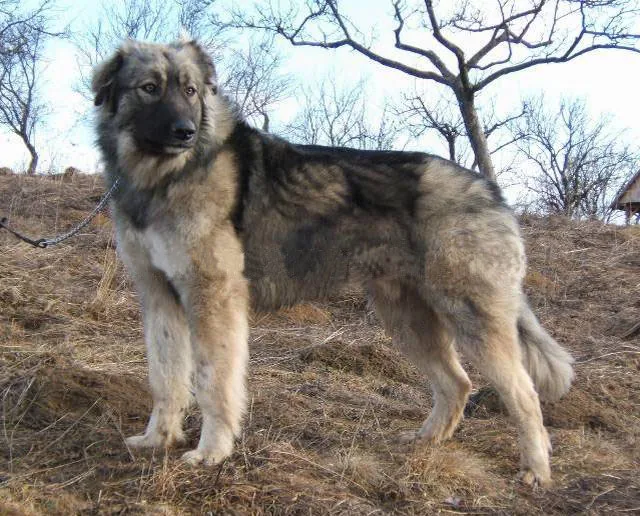
A powerful, well-proportioned dog with a strong head, medium-sized drop ears and a thick, weather-resistant double coat. Males stand around 65 to 70 cm and females slightly smaller.
The coat is straight and fairly long, with a dense undercoat. Colours are typically wolf-grey, fawn or sable shades, often with a darker mask.
Temperament
These dogs are watchful, brave and independent, with strong guarding instincts. They are usually calm and devoted with their own family but wary of strangers.
They think for themselves and are not eager to please, so training needs patience, consistency and early socialisation.
Care and exercise
The breed needs space, a secure fence and a purposeful life. Daily walks and a territory to patrol are better than being cooped up in a flat.
Brush the coat a couple of times a week, more often when it is shedding heavily. Start socialisation early so the dog learns to tell real threats from everyday visitors.
Health
Generally a robust, working-type breed. As with other large dogs, hip and elbow dysplasia and bloat can occur, so health-tested parents and sensible feeding routines are advisable.