Overview
The Castro Laboreiro Dog takes its name from a remote mountain village in northern Portugal. For centuries it lived alongside herders, guarding livestock against wolves and other large predators.
Today it is a rare breed, with only a few hundred dogs worldwide. It is a serious, alert guardian that suits experienced owners with space and a clear purpose for it.
History
The breed comes from the rocky mountains around Castro Laboreiro, close to the Peneda-Gerês area, where it worked with herders for generations. Its exact origins are unknown, and written mentions only appear in the nineteenth century.
As wolves disappeared and farming changed, the dog lost its old job. It was first shown in 1914, and a written standard followed in 1935. Genetic studies show it is distinct from other Portuguese breeds.
Appearance
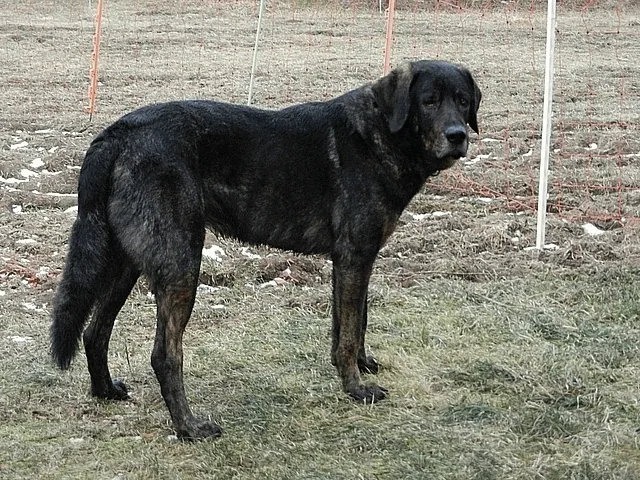
A sturdy, wolf-like dog that is large without being heavy. Height should not exceed about 60 cm and weight about 40 kg, with females somewhat smaller.
The coat is described in wolf terms, and the most prized shade is the mountain colour: a mix of light and dark grey with brown or reddish hairs forming a brindle effect.
Temperament
Naturally watchful and protective, the Castro Laboreiro is devoted to its family and wary of strangers. It was bred to think and act independently when guarding, so it can be strong-willed.
Early socialisation and calm, consistent handling are important. It is happiest with a job to do and room to roam.
Care and exercise
This is a working mountain dog that needs space, daily exercise and mental engagement. It does best in a rural home with a secure fence and is not well suited to flat living.
The coat is easy to care for with regular brushing, and more often during the shed. Start training and socialisation early.
Health
No health problems specific to the breed have been documented. As with any dog, ask breeders about health testing of the parents, and be aware that rarity does not protect against inherited disease.