Overview
The Dobermann is a sleek, muscular working dog of pinscher type, bred for protection and companionship. It is known for its graceful gait and watchful presence.
In North America it is called the Doberman Pinscher. Its reputation as fierce is exaggerated; a well-raised Dobermann is devoted and sensitive.
History
Karl Friedrich Louis Dobermann, a tax collector who also ran a dog pound in Apolda, Thuringia, set out in the 1880s to breed a dog to protect him. The exact ancestry is uncertain but probably includes the Rottweiler, German Pinscher, Beauceron, and old shepherd types.
After his death in 1894, Otto Goeller refined the breed. The US Marine Corps used Dobermanns as war dogs in World War II.
Appearance
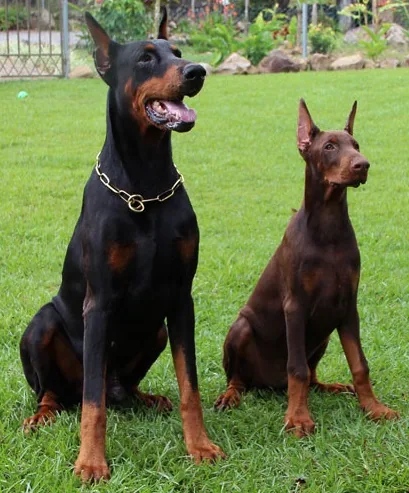
A medium-large, square, muscular dog with a long wedge-shaped head and a proud carriage. Males stand about 68 to 72 cm and weigh 40 to 45 kg, with females smaller at 63 to 68 cm and 32 to 35 kg.
Tails and ears were traditionally docked and cropped, but this is now banned in many countries.
Temperament
Intelligent, alert and tenacious in its loyalty, the Dobermann is a devoted companion that bonds closely with its family. It is highly trainable and has been ranked among the most intelligent breeds.
It can be reserved with strangers, so early socialisation and consistent training are important.
Care and exercise
Needs daily vigorous exercise and mental work such as obedience or tracking. It is a people dog and does poorly when isolated.
The short coat needs only a weekly brush, but the thin coat means it feels the cold.
Health
Prone to dilated cardiomyopathy, von Willebrand disease, wobbler syndrome, hip dysplasia and bloat. Colour dilution alopecia affects blue and fawn dogs.