Overview
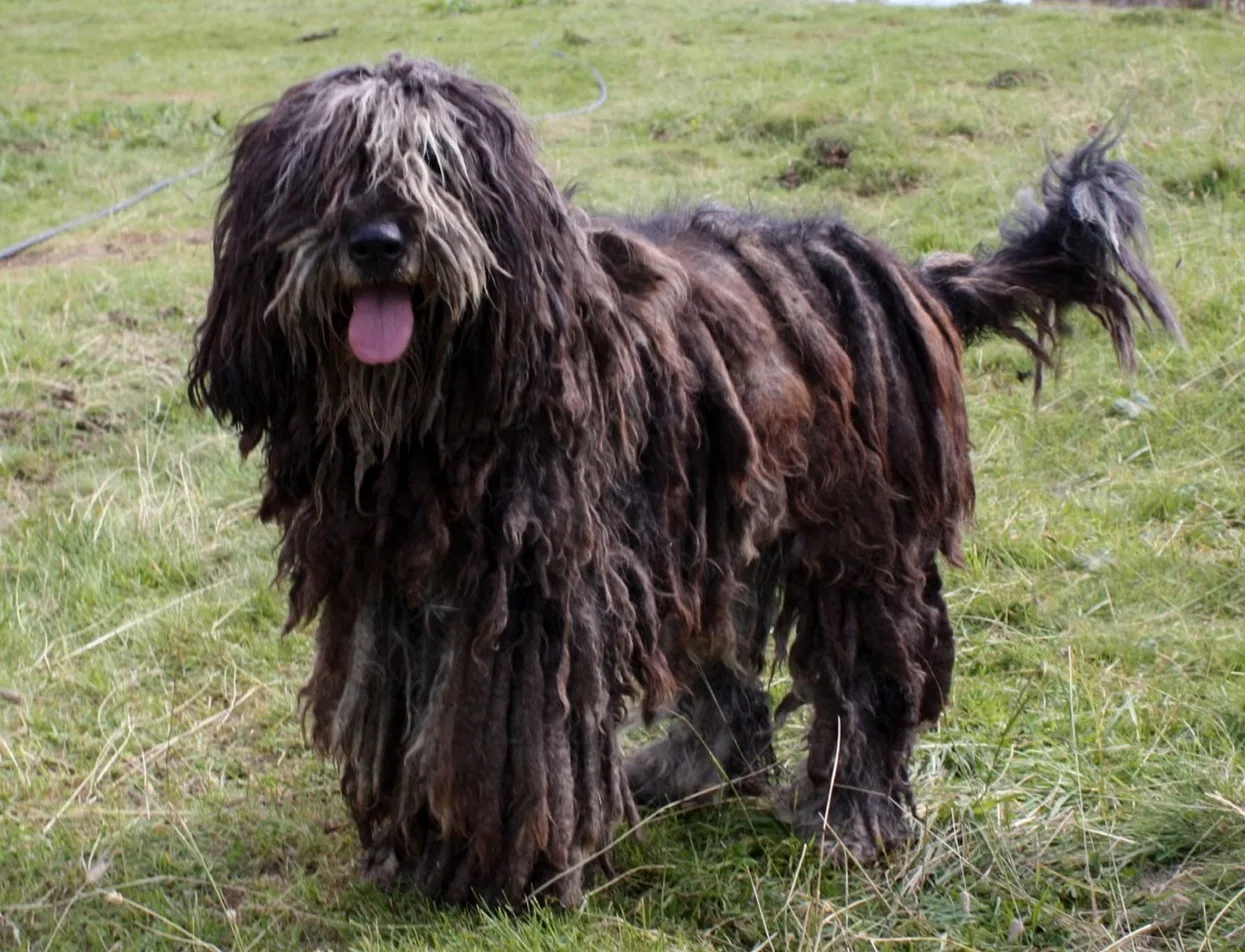
The Bergamasco Shepherd is a robust, medium-sized sheepdog from the Alpine and pre-Alpine regions of northern Italy. It is best known for its long, woolly coat that forms flat mats.
Traditionally it moved and managed sheep and cattle, and it was often trusted to look after groups of sheep on its own. Today it is a rare breed, loved by a small band of enthusiasts.
History
Its origins are unknown, but writers of the late 1700s and early 1800s described large, long-haired dogs helping Bergamasco shepherds guard and drive flocks. A 2018 genetic study found haplotypes shared with the Berger Picard, Bernese Mountain Dog and Briard.
One was shown at the first Italian dog show in Milan in 1881. After the decline of transhumant sheep farming, enthusiasts rebuilt the breed, a standard was drafted in 1946, a club was formed in 1949 and the FCI accepted it in 1956. The AKC recognised it in 2015.
Appearance
A solid, well-proportioned dog, nearly square in outline. Males stand about 58 to 62 cm and weigh 32 to 38 kg, and females are a little smaller and lighter. The long, thick coat covers the whole body and forms matted locks, especially over the hindquarters, with goat-like wavy hair on the front and finer hair on the head.
Temperament
Patient, loyal and attentive, with a calm, thoughtful way of working. It bonds closely with its family and is naturally watchful with strangers, and it is usually gentle with children it knows.
Care and exercise
It needs daily exercise and a job or activity to keep its mind busy. The coat is not brushed but separated into flocks by hand as it grows, and it takes a long time to dry after a bath. Early socialisation is recommended.
Health
Generally a hardy breed. Hip dysplasia and bloat can occur, and the dense coat needs to be kept clean and dry to avoid skin problems.