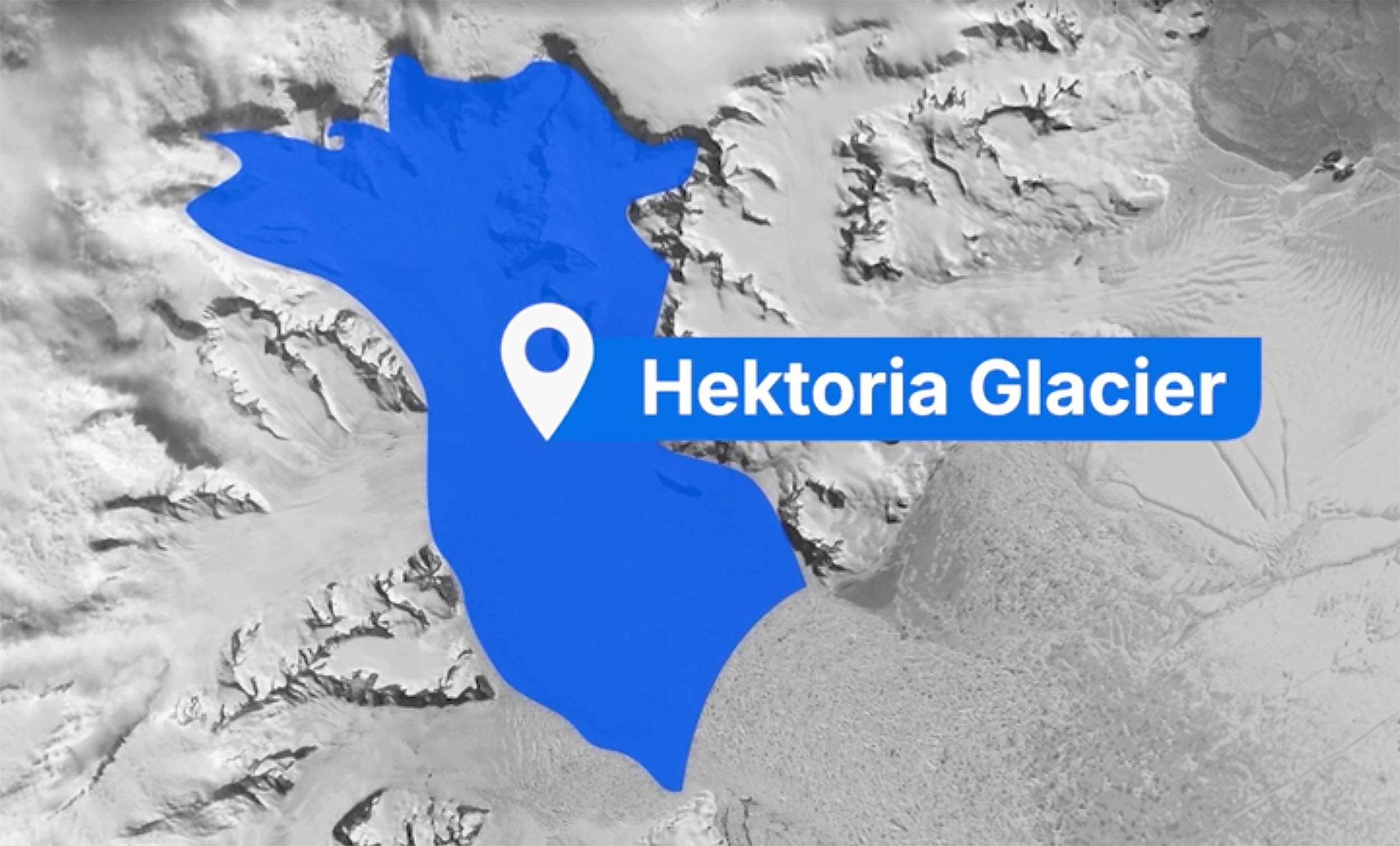
Antarctica's Hektoria Glacier retreated eight kilometers in just two months, with nearly half of it breaking apart and vanishing. A Nature Geoscience study published this week found the peak retreat rate hit 0.8 kilometers per day between November and December 2022 — nearly ten times faster than any previously measured value for a glacier still resting on the seabed.
The collapse was triggered by the loss of decade-old fast ice in the Larsen B embayment, which had been holding the glacier in place. Once the ice disappeared, Hektoria experienced a six-fold increase in flow speed and a 40-fold jump in thinning. The glacier sat on a flat underwater bedrock surface called an ice plain, which allowed it to suddenly float and fracture from below.
While Hektoria covers roughly 115 square miles — about the size of Philadelphia — the real concern is what this means for much larger Antarctic glaciers. If similar collapse mechanisms activate on bigger ice sheets, the consequences for global sea level rise could be severe.