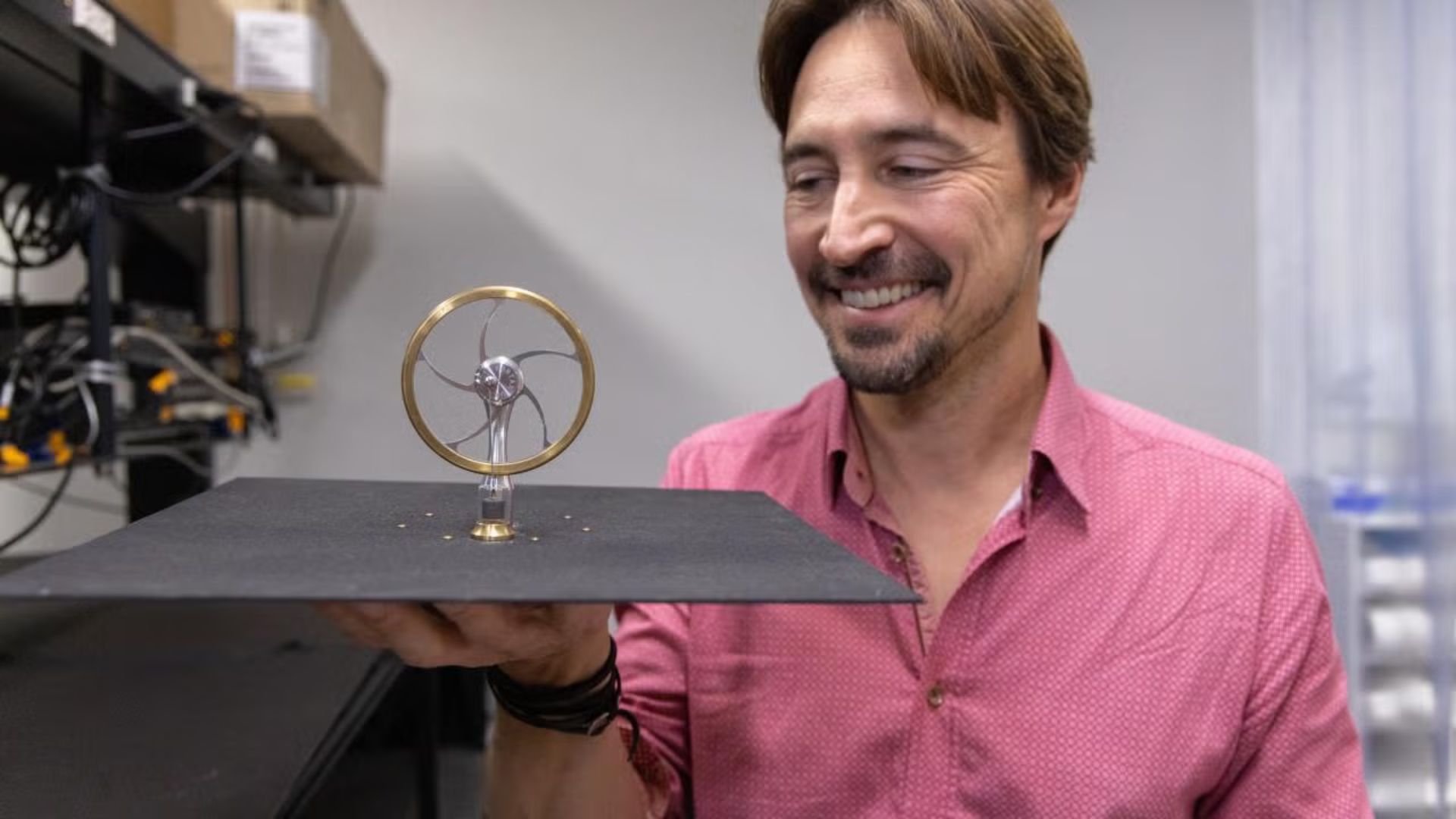
UC Davis engineering professor Jeremy Munday and graduate student Tristan Deppe have built a prototype Stirling engine that generates power at night by radiating heat into the frigid void of outer space. The device uses a special panel pointed at the night sky to cool one side of the engine, while the warm ground beneath heats the other, creating enough temperature difference to drive a piston and spin a flywheel.
After a full year of nighttime testing, the compact device produced at least 400 milliwatts of mechanical power per square meter. It successfully powered a small fan directly and connected to an electric motor to generate current. UC Davis has filed a provisional patent for the technology.
The approach works best in regions with clear skies and low humidity. Researchers say future applications could include ventilating greenhouses or residential buildings without conventional energy sources — essentially functioning like solar cells in reverse.