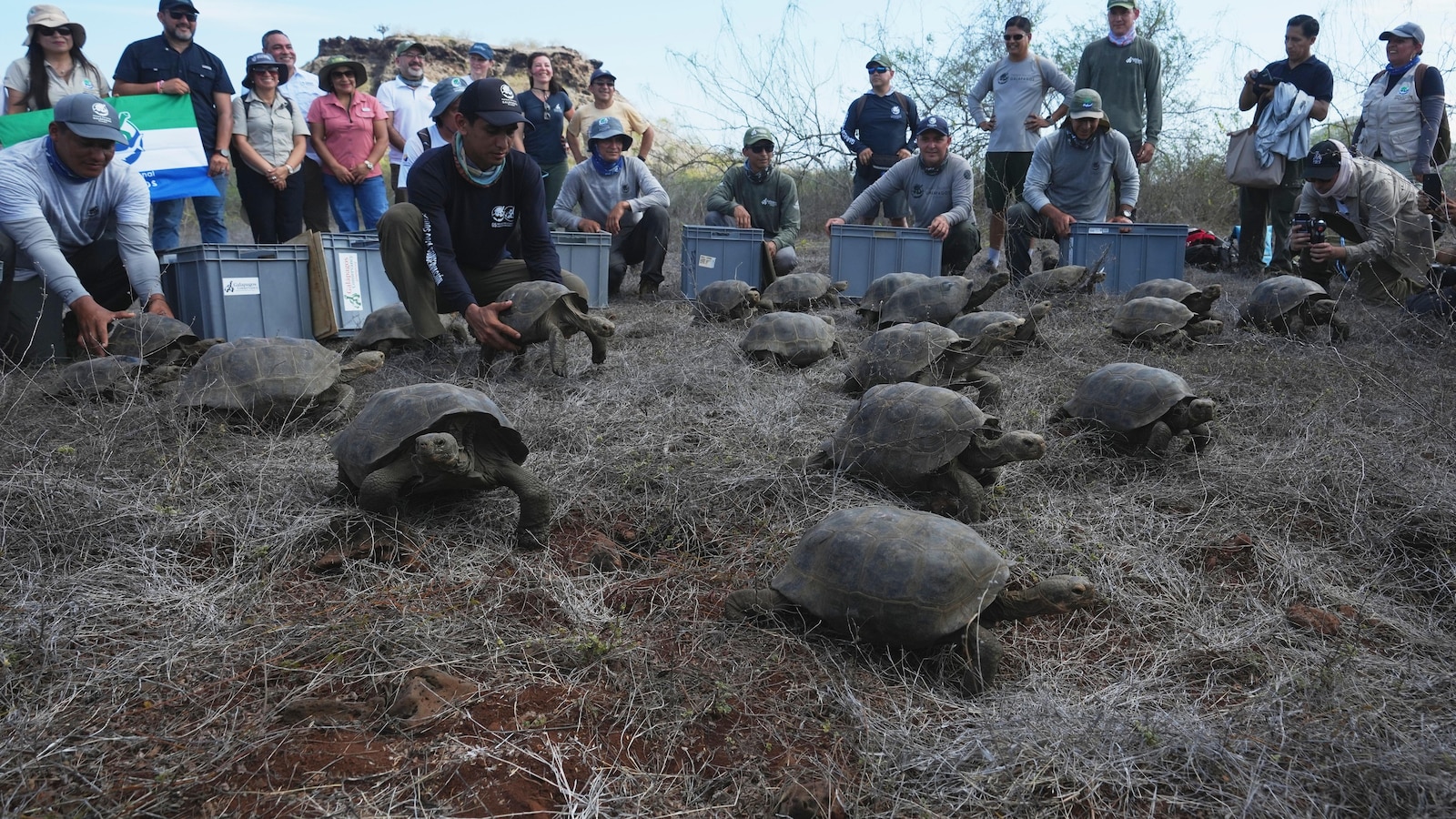
The Galápagos National Park released 158 juvenile giant tortoises onto Floreana Island on February 20, marking the species' historic return after more than 180 years of absence. The Floreana Giant Tortoise (Chelonoidis niger niger) was driven to extinction on the island in the mid-1800s by whaling crews and human exploitation, from an original population of roughly 20,000.
The released juveniles, aged 8 to 13, carry 40–80% of the original Floreana genetic lineage. Scientists discovered their ancestry in the early 2000s among tortoises living on Wolf Volcano on Isabela Island, launching a multi-decade breeding program. These 158 are the first of 700 planned for gradual reintroduction.
As keystone species, the tortoises will disperse seeds, maintain open habitats, and restore ecosystem processes disrupted for nearly two centuries. Galápagos National Park Director Lorena Sánchez called the project "one of the greatest challenges undertaken by the Park," carried out through years of science-based collaboration between six conservation organizations.