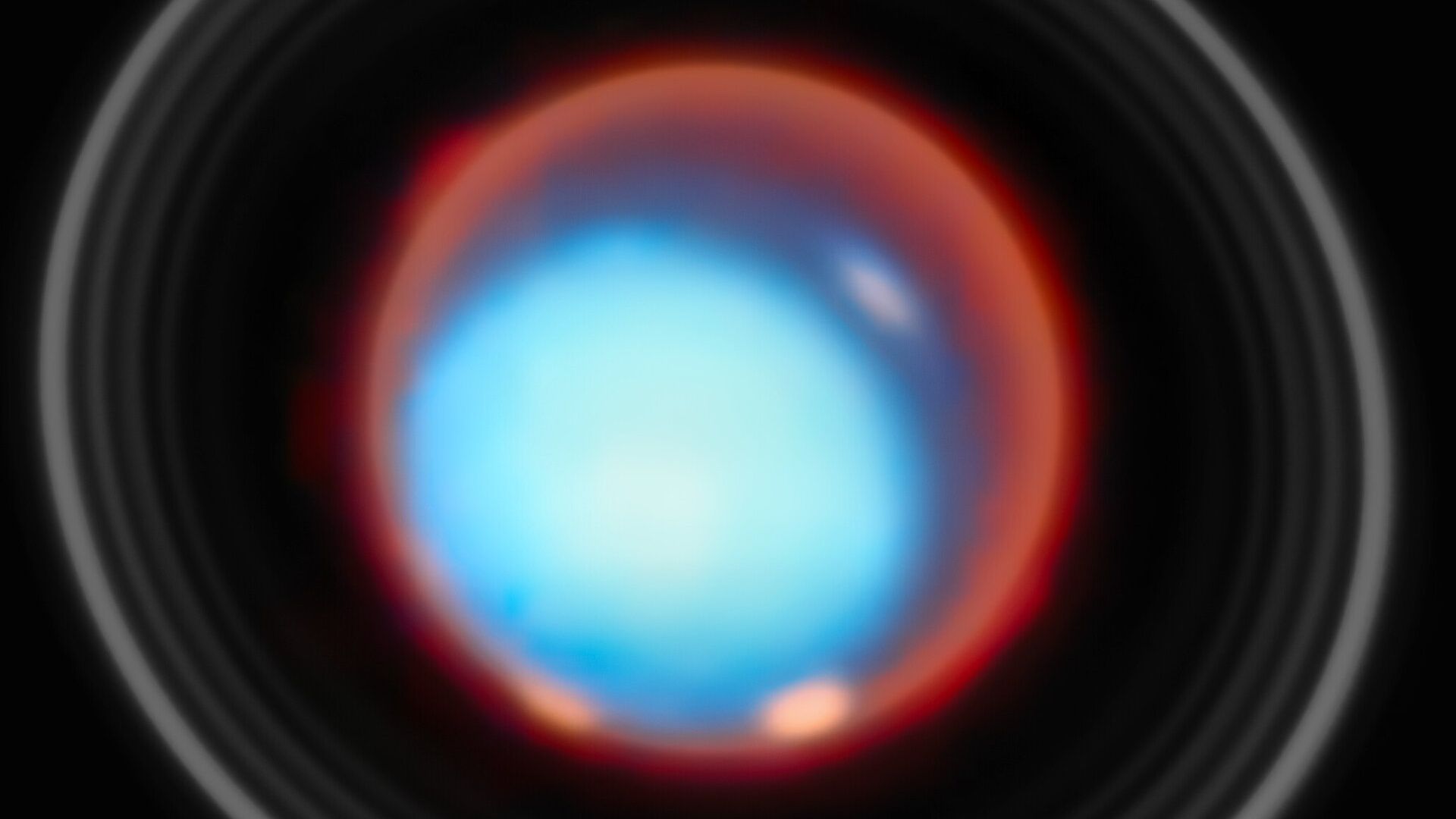
An international team led by PhD student Paola Tiranti at Northumbria University has used the James Webb Space Telescope to create the first-ever three-dimensional map of Uranus's upper atmosphere and auroras. Using Webb's NIRSpec instrument over 15 hours of observation, the researchers mapped temperature and ion density extending 5,000 km above the planet's cloud tops — a region called the ionosphere that had remained largely unexplored since Voyager 2's brief flyby in 1986.
The data revealed two bright auroral bands near Uranus's magnetic poles, with a distinct depletion zone between them linked to transitions in its unusually tilted magnetic field. Temperatures peaked at 426 Kelvin (about 150°C) between 3,000–4,000 km altitude, while ion density maxed out around 1,000 km. The findings also confirm that Uranus's upper atmosphere has been steadily cooling since the early 1990s.
Tiranti called the results "a crucial step towards characterizing giant planets beyond our Solar System," noting that Webb's sensitivity allows scientists to trace how energy moves upward through the atmosphere. The study was published in Geophysical Research Letters.