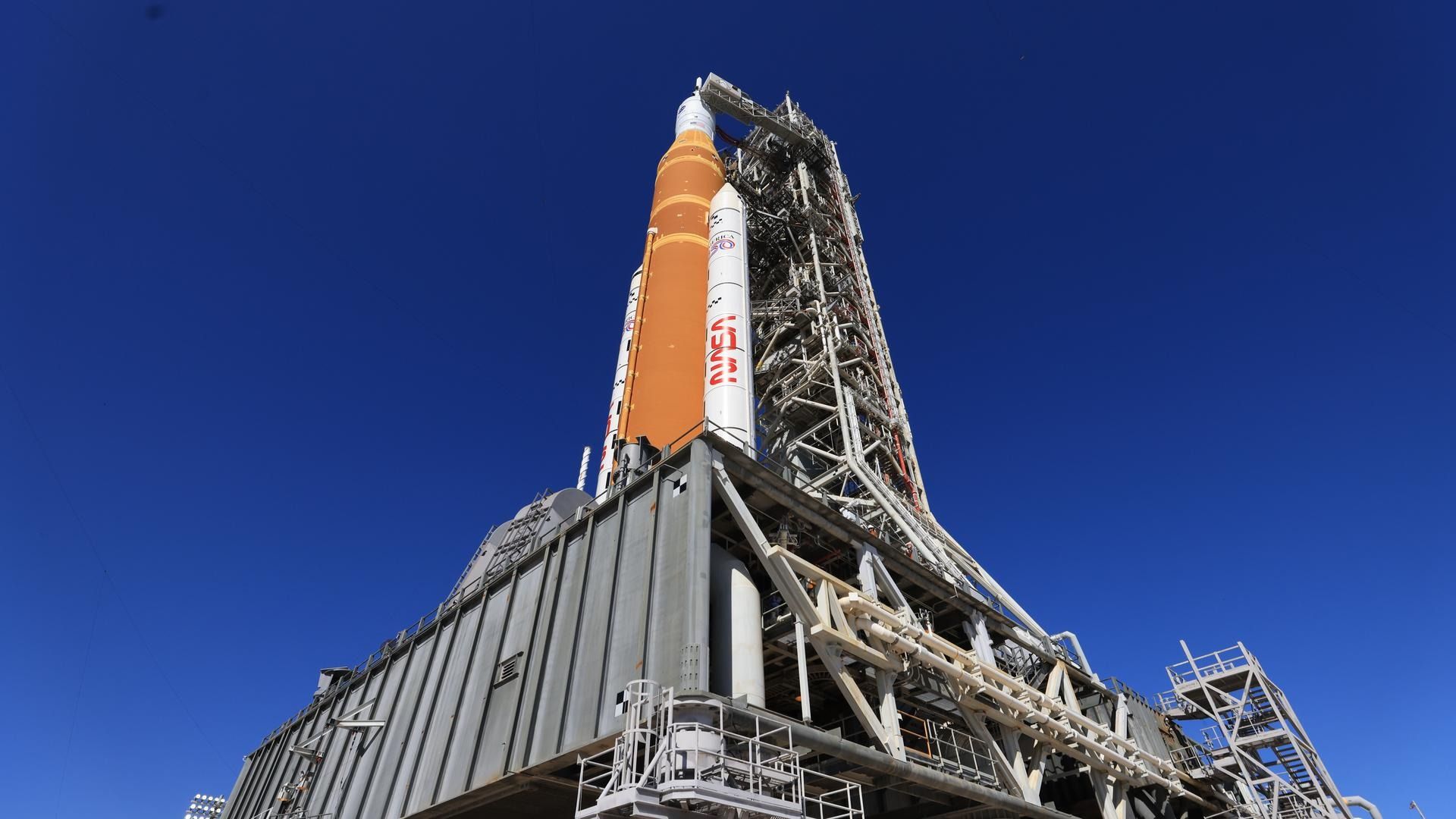
NASA has delayed the Artemis II mission, the first crewed lunar flyby in over 50 years, after engineers discovered a helium flow interruption in the Space Launch System rocket's interim cryogenic propulsion stage overnight on February 21. The agency is now preparing to roll the 322-foot rocket and Orion spacecraft back from Launch Pad 39B to the Vehicle Assembly Building at Kennedy Space Center for repairs.
The helium system is critical for maintaining proper environmental conditions for the stage's engine and pressurizing liquid hydrogen and liquid oxygen propellant tanks. NASA identified three possible fault sources: a final filter on the ground umbilical connection, a failed quick-disconnect interface where issues have been noted before, or a malfunctioning check valve onboard the rocket. The March 6 launch target has been scrapped, with the next available window now in early April, with dates of April 1, 3, 4, 5, and 6 under consideration.
Artemis II would send four astronauts — Reid Wiseman, Victor Glover, Christina Koch, and Jeremy Hansen — on a 10-day journey around the Moon, marking the first time humans have traveled beyond low Earth orbit since Apollo 17 in 1972.