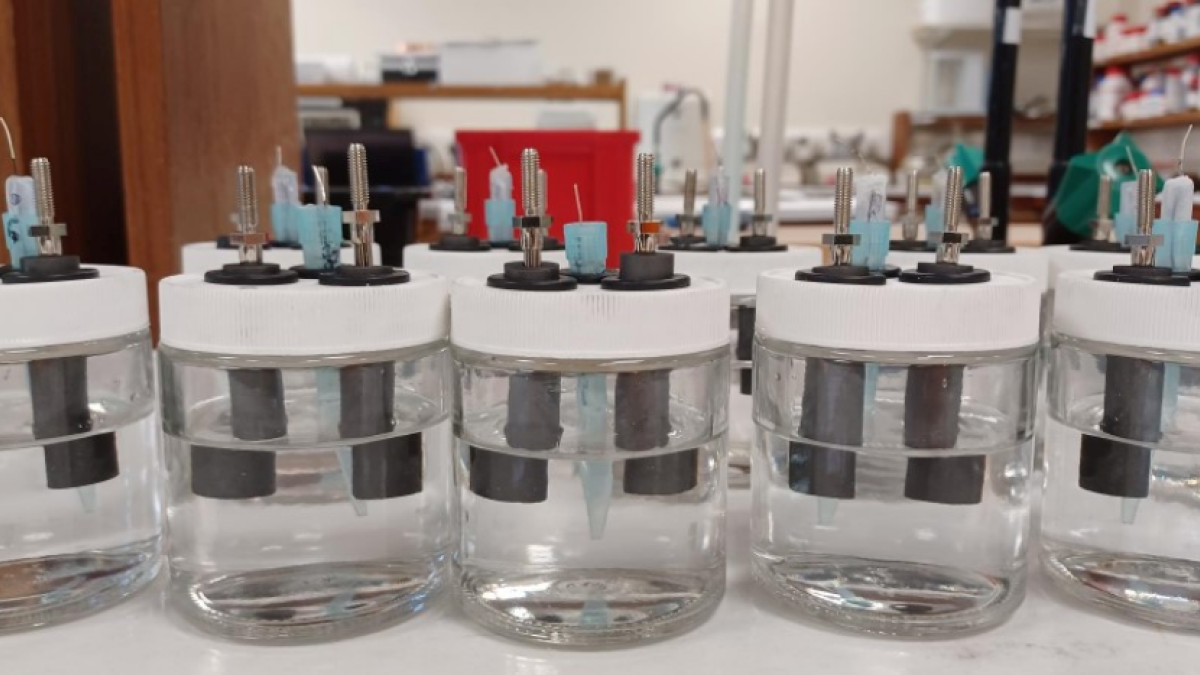
Researchers at the University of Surrey have discovered that keeping water inside a sodium-based battery material, instead of removing it as traditionally done, nearly doubles its charge storage capacity. The material, nanostructured sodium vanadate hydrate (NVOH), also charges faster and remains stable for over 400 cycles, placing it among the top-performing sodium battery materials ever reported.
"Our results were completely unexpected — the material showed much stronger performance and stability than expected," said lead researcher Dr. Daniel Commandeur. The findings, published in the Journal of Materials Chemistry A, challenge decades of conventional wisdom that water must be removed from battery electrode materials.
Perhaps most remarkably, the team found that NVOH continues to function effectively in salt water, simultaneously removing sodium from the solution in a process known as electrochemical desalination. This dual capability suggests future systems could store energy using seawater as a free, abundant electrolyte while producing fresh drinking water as a byproduct.