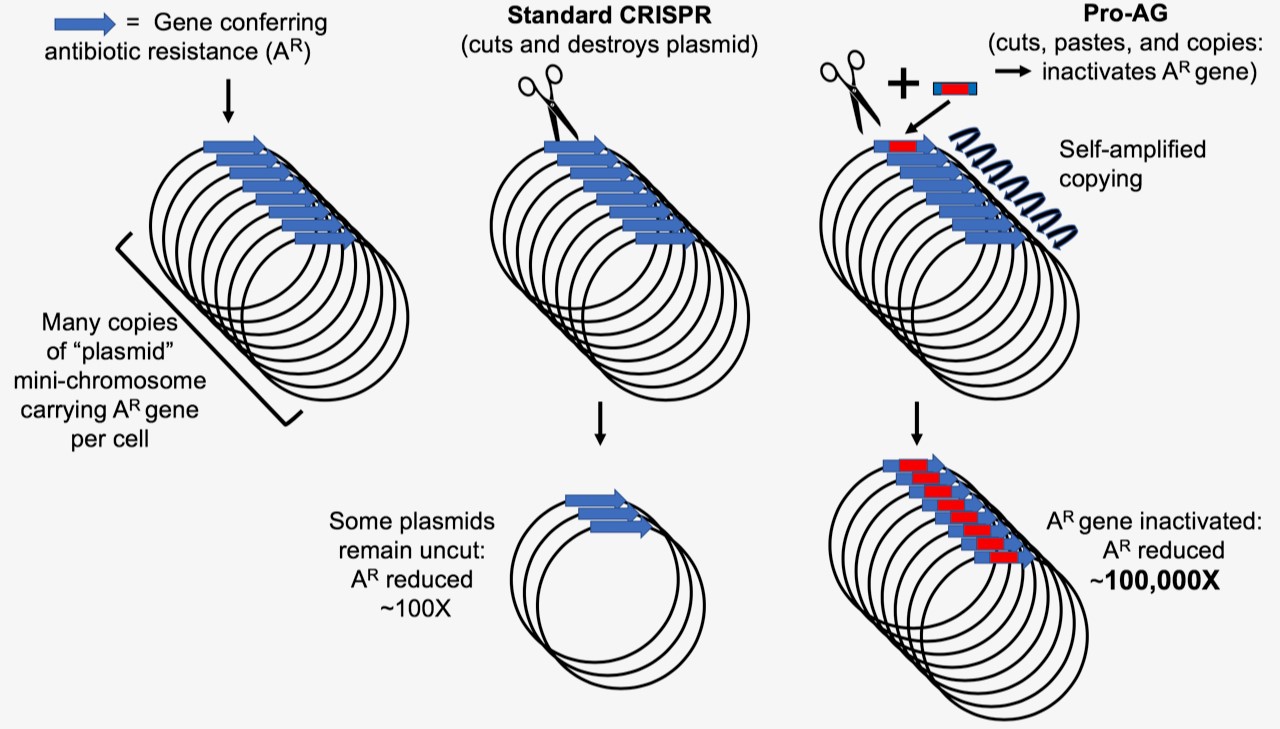
Researchers Ethan Bier and Justin Meyer at UC San Diego have developed pPro-MobV, a second-generation CRISPR-based system inspired by insect gene drives that can spread through bacterial populations and actively strip away antibiotic resistance genes. Published February 18 in the Nature journal npj Antimicrobials and Resistance, the tool uses conjugal transfer — a form of bacterial mating — to move its genetic payload from cell to cell, inserting itself into plasmids and disrupting the resistance genes that make superbugs so dangerous.
Unlike traditional antibiotics that simply try to kill resistant bacteria, pPro-MobV reverses resistance by deleting the genes that cause it. The system works even inside biofilms, the stubborn protective layers that shield microbes from drugs in hospital settings. It can also be delivered via bacteriophages and includes built-in safety mechanisms for cassette removal if needed.
With antibiotic-resistant infections projected to cause over 10 million deaths annually by 2050, the breakthrough offers a fundamentally new approach. "This technology can actively reverse the spread of antibiotic-resistant genes, rather than just slowing or coping with their spread," Meyer said.