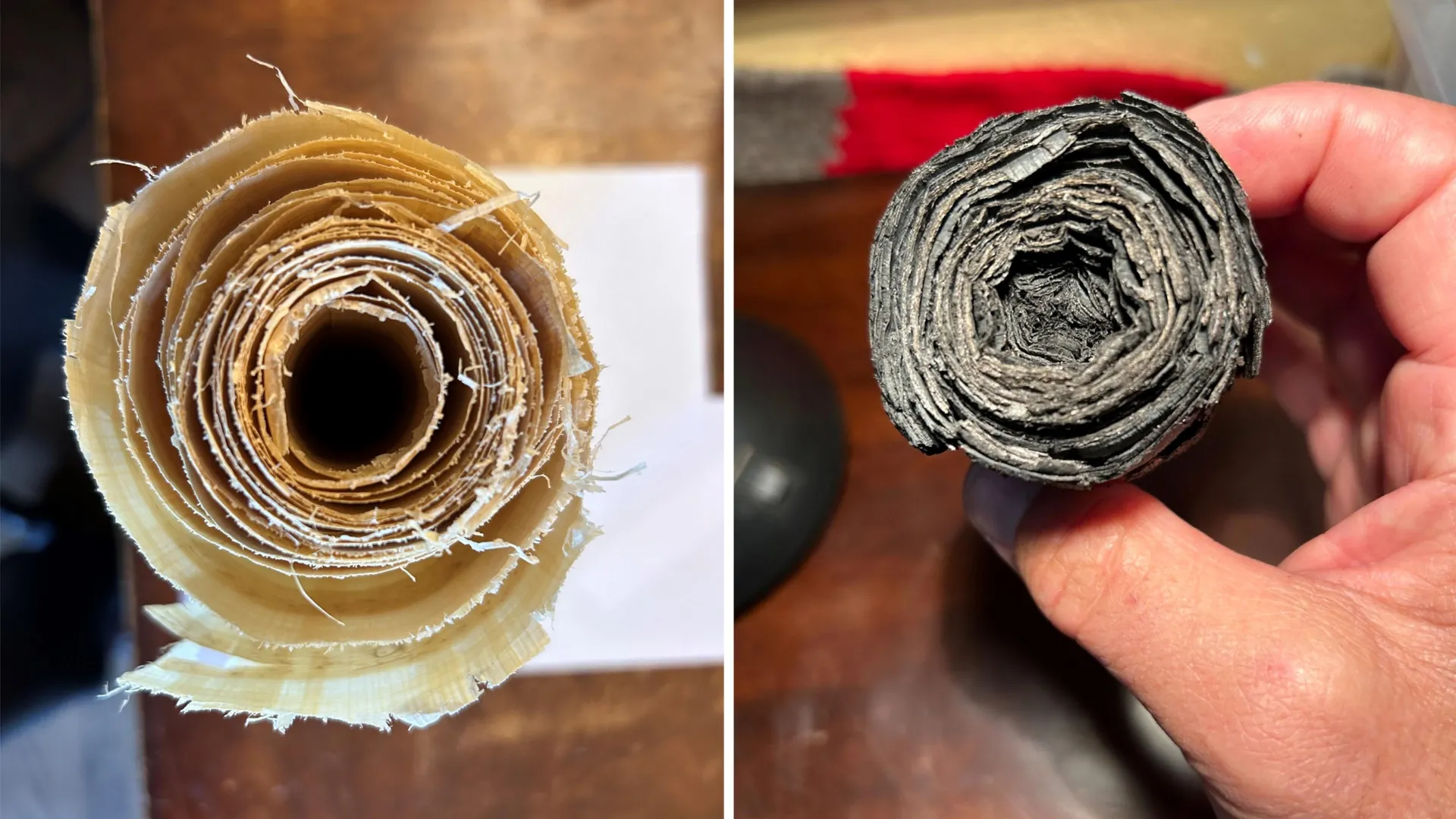
Researchers led by Berkeley SETI affiliate Douglas Seiler, working with NIST physicist Jake LaManna and papyrologists from UC Berkeley, deliberately carbonized modern papyrus scrolls to test a decades-old clue: some ancient ink contains lead. Their experiment shows that lead-laced ink absorbs roughly 25 times more X-rays than the surrounding burnt papyrus, making it stand out sharply in scans even when carbon-based ink is nearly invisible against the charred material.
The technique can detect as little as 25 micrograms of lead per square centimeter, a threshold researchers say is achievable with existing X-ray phase-contrast tomography used to scan the roughly 1,800 carbonized scrolls and fragments that survived the 79 C.E. eruption of Mount Vesuvius at Herculaneum. Crucially, the scans can be done without physically unrolling the fragile scrolls, which often crumble at the slightest touch.
Lead had previously been spotted in a handful of Herculaneum scrolls, first by computer scientist Brent Seales in 2009 and again in a 2016 study, but it was unclear whether it was added intentionally or how reliably it could be used to recover text. Papyrologist Leah Packard-Grams called the stakes "the largest in the history of Greek literature," since the unread scrolls could contain philosophical and literary works otherwise lost since antiquity.