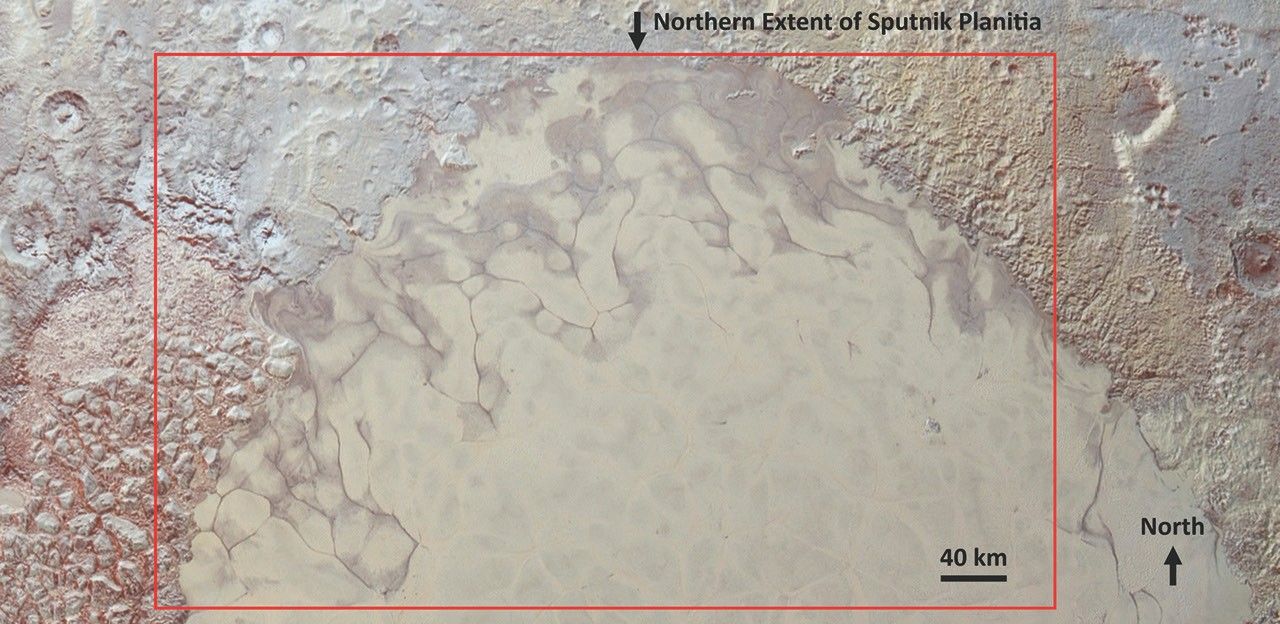
A new analysis of imagery from NASA's New Horizons spacecraft has revealed the first evidence that liquid nitrogen may still be flowing on Pluto's surface today. Led by Alan Stern of the Southwest Research Institute, the study focuses on Sputnik Planitia, a heart-shaped glacier larger than Texas and Oklahoma combined.
Dark markings along the glacier's northern edge resemble features on Earth wetted by rising groundwater, since Pluto's atmosphere makes liquid nitrogen rain physically impossible. Computer models suggest nitrogen ice several kilometers below the surface can melt from internal heat and rise through narrow cracks under pressure, wetting the frozen crust above. Researchers estimate this part of Sputnik Planitia is less than one million years old, remarkably young by geological standards, and more than half of Pluto's surface still hasn't been mapped at high resolution.
"Pluto never stops surprising us, and this new result certainly does that," said Stern. The finding overturns the idea that Pluto is a geologically dead world and hints that similar subsurface liquid activity could explain features seen on other icy bodies, like the geysers on Neptune's moon Triton.