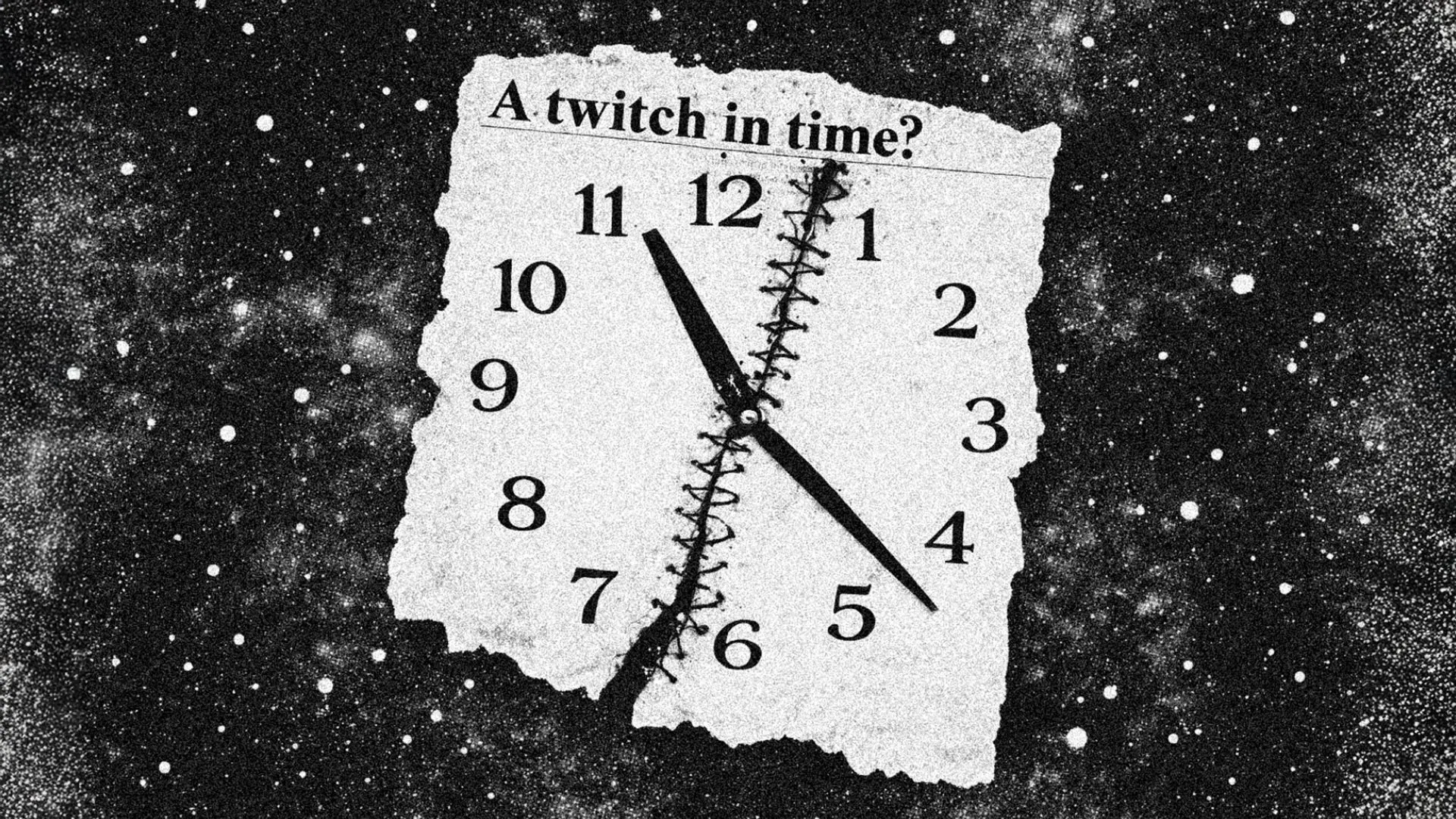
A team led by Nicola Bortolotti at Rome's Enrico Fermi Museum and Research Centre has proposed that time itself may carry a fundamental, irreducible uncertainty, placing an ultimate limit on how precisely any clock could ever measure it.
Working with colleagues from INFN-Frascati and Hungary's Wigner Research Centre, the team examined two leading quantum collapse frameworks, the Diosi-Penrose and Continuous Spontaneous Localization models. Both predict that tiny fluctuations in the Newtonian gravitational potential induce a matching uncertainty in the flow of time, hinting at a hidden link between quantum mechanics, gravity and spacetime.
The effect is vanishingly small. Co-author Catalina Curceanu said the uncertainty is many orders of magnitude below anything currently measurable, and colleague Kristian Piscicchia added that modern timekeeping technologies, including today's most precise atomic clocks, are entirely unaffected. The findings were published in Physical Review Research.