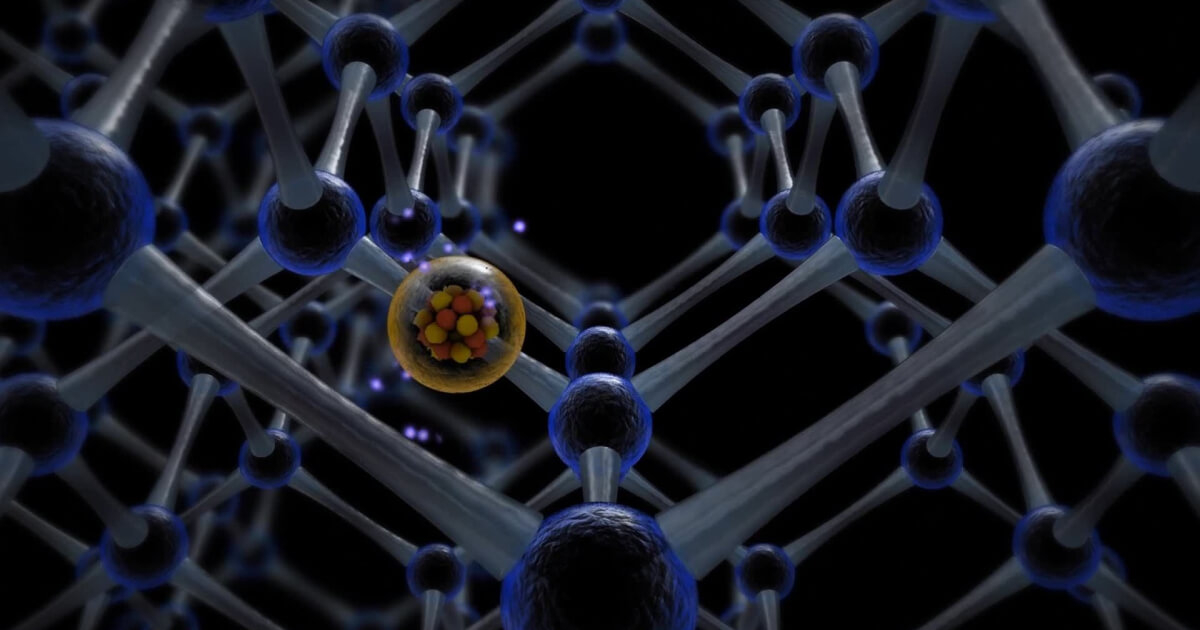
Researchers at Harvard's John A. Paulson School of Engineering and Applied Sciences have found a way to shield fragile quantum information using mechanical vibrations instead of the microwave pulses conventionally used to control qubits. The team, led by Professor Marko Lončar, applied continuous acoustic fields to silicon-vacancy spin qubits in diamond, effectively "dressing" them in sound to block out the environmental noise that normally scrambles quantum data.
The method, called all-mechanical coherence protection, extended the qubit's coherence time by roughly threefold in real hardware. Coherence time is the window during which a qubit can reliably hold quantum information, and every added microsecond gives quantum computers more room to complete useful calculations before errors creep in.
Because sound waves travel far more slowly than light and require far smaller structures to guide them, the approach opens the door to compact, chip-scale quantum networks and hybrid systems that mix different types of qubits. The research, carried out with graduate researcher Eliza Cornell and former postdoctoral scholar Zhujing Xu, was published in Nature Physics.