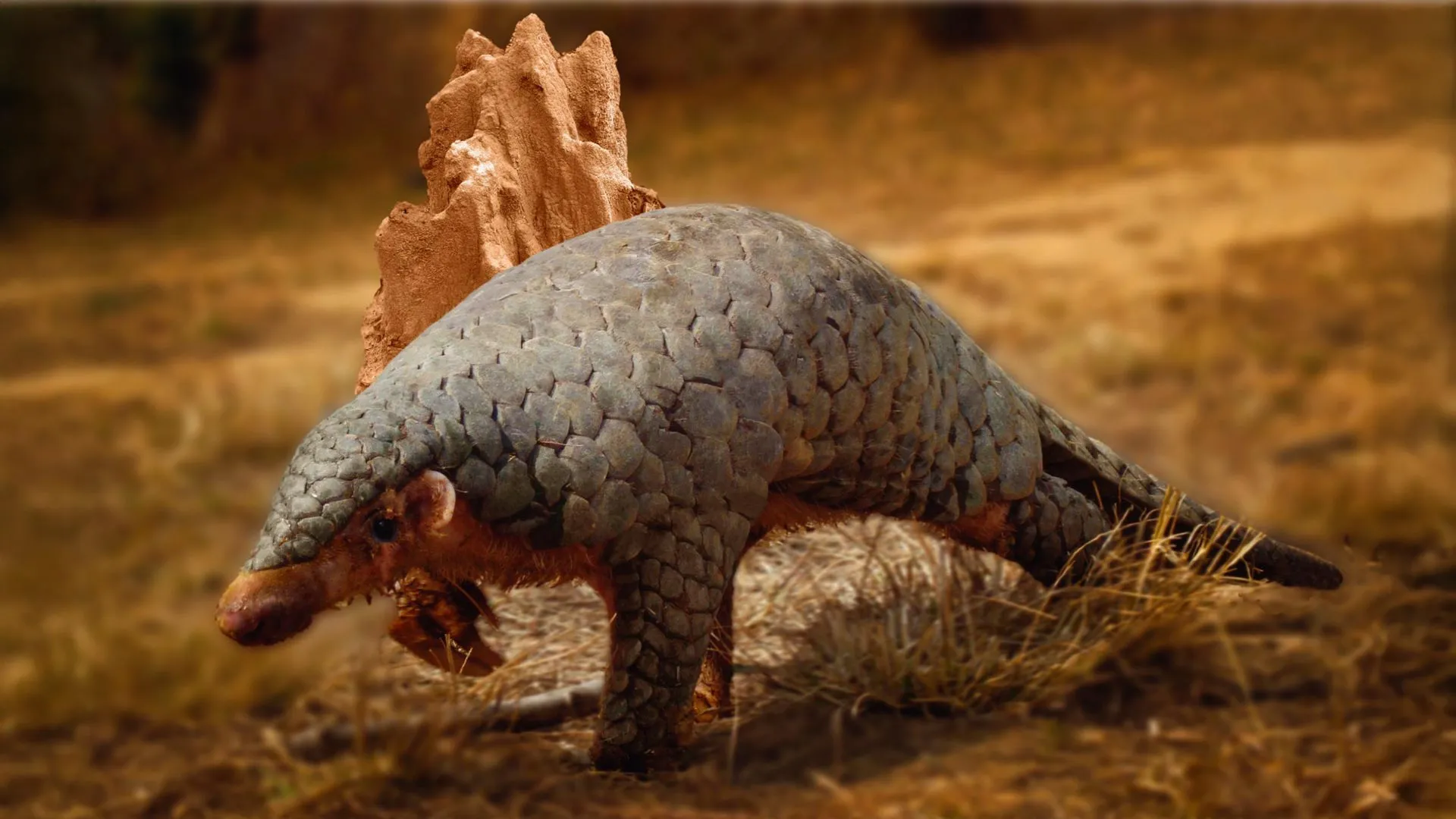
Scientists have confirmed that pangolins living in the Himalayan foothills of Nepal and northern India belong to a distinct species, Manis aurita, after extracting DNA from a specimen collected in 1836 and preserved for nearly 190 years at London's Natural History Museum.
The finding corrects a naming mix-up: pangolins in the region had been classified as a subspecies of the Chinese pangolin, then briefly renamed Manis indoburmanica in 2025 after researchers spotted genetic differences. The historical DNA proved that name was wrong — the animals matched Manis aurita, a species first described in 1836 but since forgotten.
Manis aurita is larger, has a longer tail and smaller ears than its Chinese relative. Pangolins are the world's most trafficked mammal, poached for scales used in traditional medicine; researchers led by Chicago's Field Museum say correctly identifying species lets conservationists trace seized scales back to the specific populations under threat.