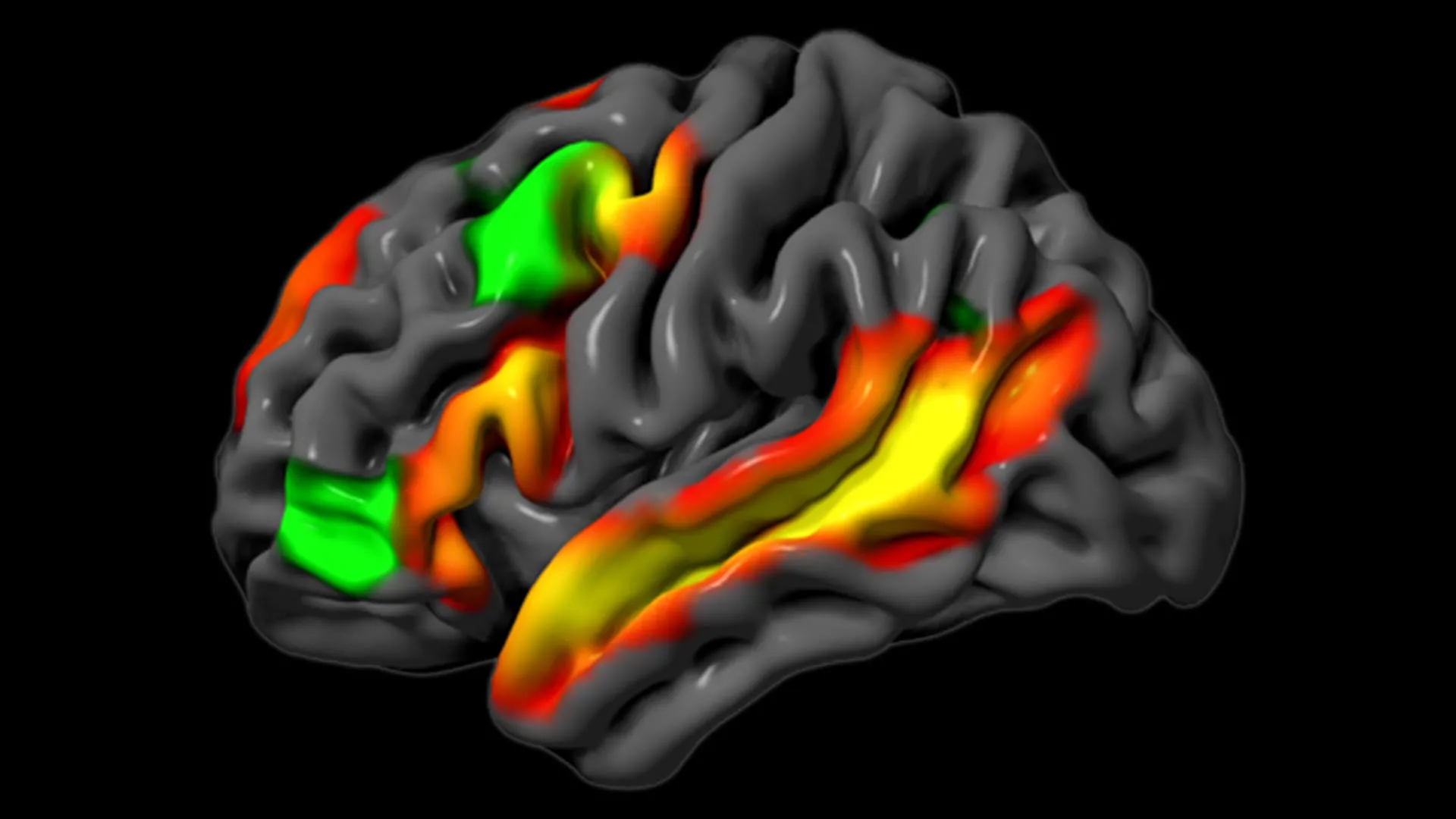
MIT neuroscientists led by Evelina Fedorenko at the McGovern Institute have found that logical reasoning runs on a brain system entirely separate from language, challenging the long-held idea that we think in words.
The team tested two stroke survivors with severe aphasia on language-free logic games — number-pattern inference and geometric matrix puzzles — and found they performed just as well as neurotypical controls. MRI scans of healthy adults confirmed it: the brain's language-processing regions stayed quiet during reasoning tasks, while a separate "multiple demand" network handled the logic, engaging for inductive reasoning but not deductive reasoning.
Published July 8 in the Proceedings of the National Academy of Sciences, the findings push back on the philosophical assumption that thought requires language and could reshape how researchers view aphasia — showing that language loss does not mean a loss of reasoning ability. The team says the work may also inform how AI models are built to reason.