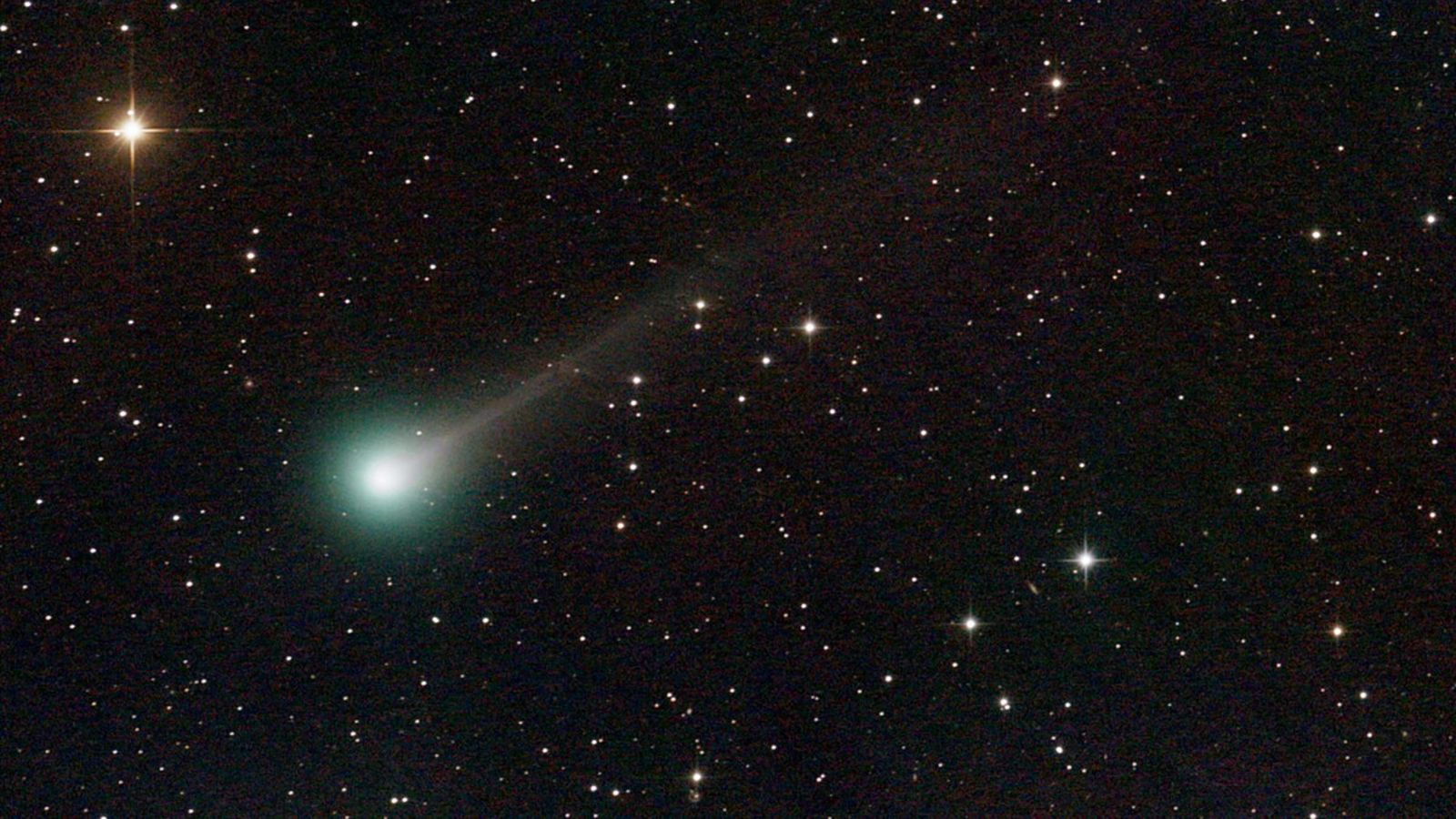
Comet C/2025 R3 (PanSTARRS), discovered in September 2025 by the Panoramic Survey Telescope and Rapid Response System in Hawaii, is shaping up to be the most anticipated celestial event of 2026. The comet is currently speeding toward the sun and will reach perihelion on April 20, passing within 47.4 million miles of the sun before making its closest approach to Earth on April 27 at a distance of 44 million miles.
Current brightness models predict the comet will reach magnitude 7 — too dim for unaided eyes — but a phenomenon called forward scattering could push it to magnitude 2.5, comparable to the brightest stars in Cassiopeia. Because the comet will pass between Earth and the sun, its dust tail will reflect and scatter sunlight directly toward our planet, potentially boosting its apparent brightness dramatically in late April.
The best viewing window opens around April 17 during the new moon, when dark skies will maximize visibility. Northern Hemisphere observers should look to the morning sky in late April, while Southern Hemisphere viewers will have their chance in the evening sky in early May. Astronomers caution that comet brightness predictions are notoriously unreliable — comets can fizzle or spectacularly outperform expectations.